Introduction
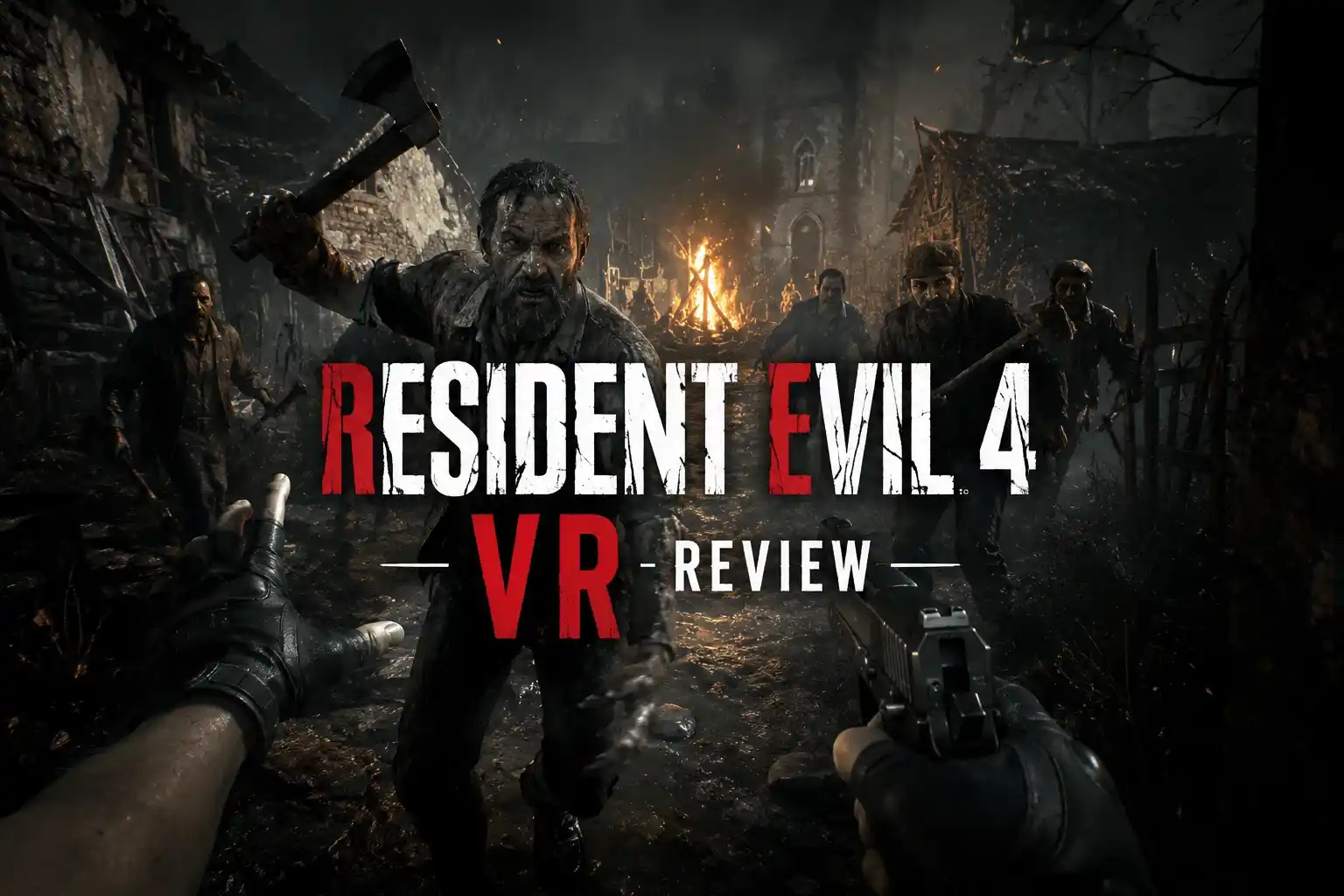
Resident Evil 4 VR review examines how Capcom’s legendary survival horror title translates into a fully immersive virtual reality experience on modern headsets like Meta Quest and PSVR2. The transition from third-person gameplay to first-person VR fundamentally changes combat pacing, tension, and environmental awareness. Players are no longer controlling Leon from a distance—they are inside his world, physically interacting with weapons, enemies, and inventory systems in real time.
This review is part of our full coverage inside The Complete Game Reviews Hub, where we analyze modern, VR, and classic games across all major platforms.
By Prime Games Arena | Gaming Expert & PC Performance Specialist
Based on our gameplay experience, this VR adaptation delivers one of the most impactful transformations of a classic game into modern immersive hardware, especially on standalone devices like Meta Quest headsets.
Quick Summary
- The game fully converts the original campaign into first-person VR with motion-based interactions
- Combat becomes more intense due to manual aiming, reloading, and spatial awareness
- Performance varies significantly across standalone and PC VR systems
- Horror elements are amplified due to proximity-based enemy encounters
- Comfort settings are essential for long play sessions
VR Transformation of a Classic Survival Horror Game
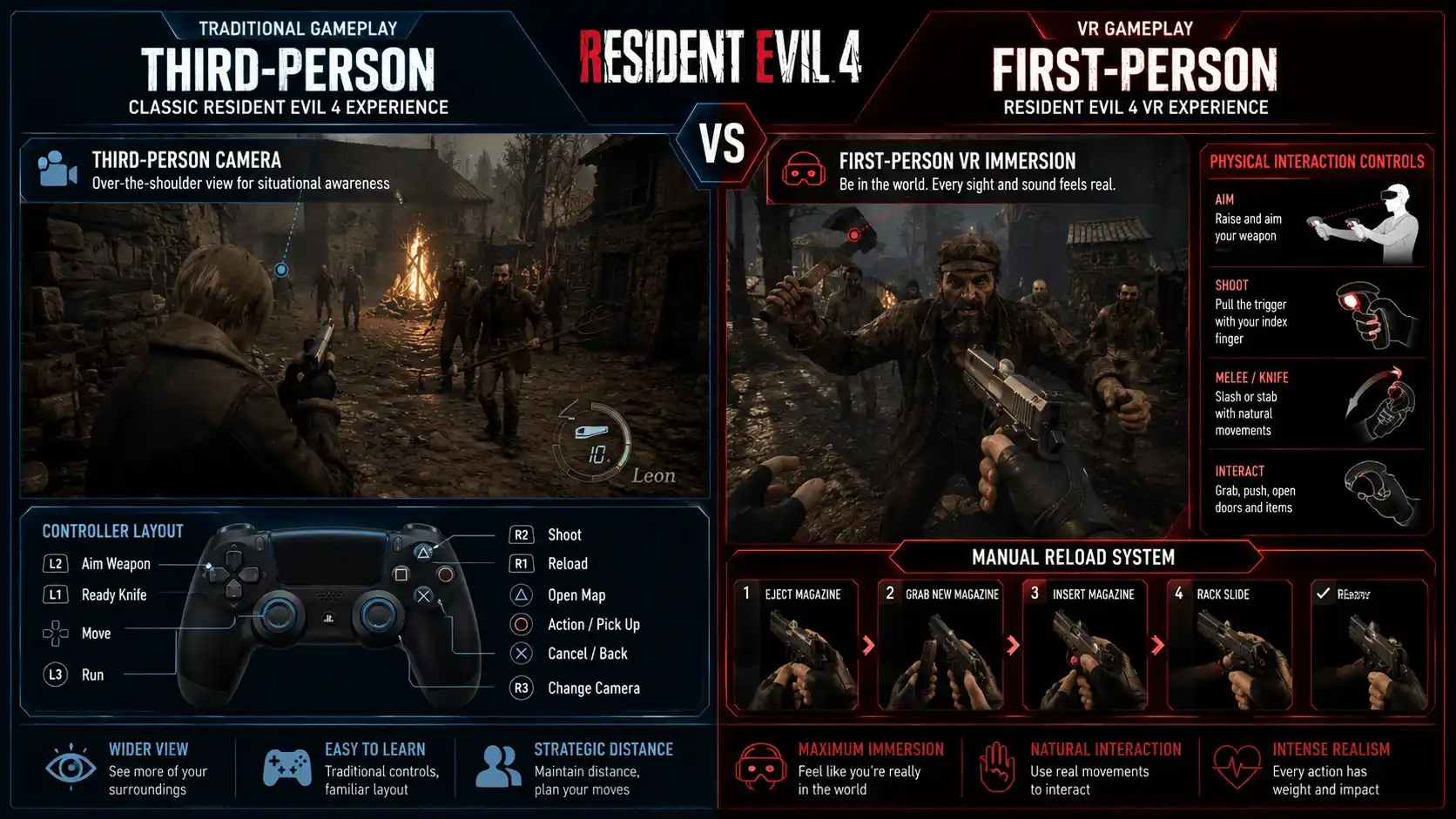
The VR adaptation of Resident Evil 4 reworks the original third-person structure into a first-person immersive format while preserving the full campaign. Instead of controlling a character from an external camera, players physically aim, reload, and interact with objects using motion controllers.
This transformation affects pacing and tension. Encounters feel more immediate because enemies occupy real physical space in front of the player. The core structure, enemy placements, and story progression remain intact, ensuring the experience stays faithful to the original design while introducing a new interaction layer.
Platform Experience Across Meta Quest and Other Systems
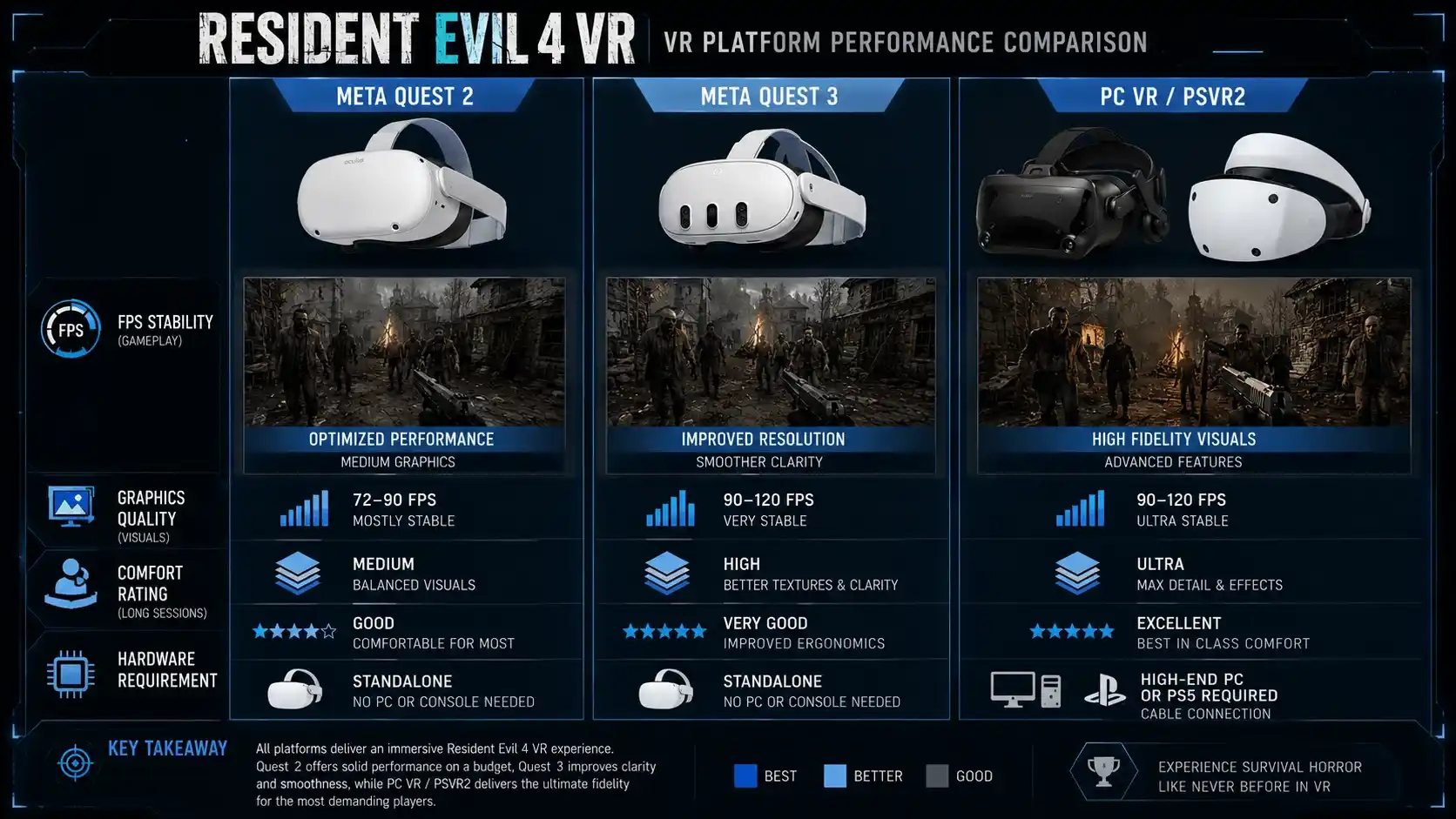
The experience varies widely depending on hardware capabilities and platform optimization. Standalone headsets prioritize accessibility, while PC VR systems emphasize visual fidelity.
Meta Quest Performance Overview
Meta Quest 2 delivers a fully standalone experience with optimized textures and stable frame rates. However, visual detail is reduced compared to higher-end systems due to hardware constraints.
Meta Quest 3 improves clarity, resolution, and rendering stability, offering a sharper and more comfortable VR experience.
Other VR Platforms
- PSVR2 provides advanced haptics and adaptive trigger feedback
- PC VR (SteamVR) delivers highest graphical fidelity and resolution scaling
- Wired setups offer better consistency but reduce mobility
In our testing, performance consistency plays a bigger role in comfort than raw graphical quality, especially in combat-heavy sections.
Core Interaction and Combat Systems in VR
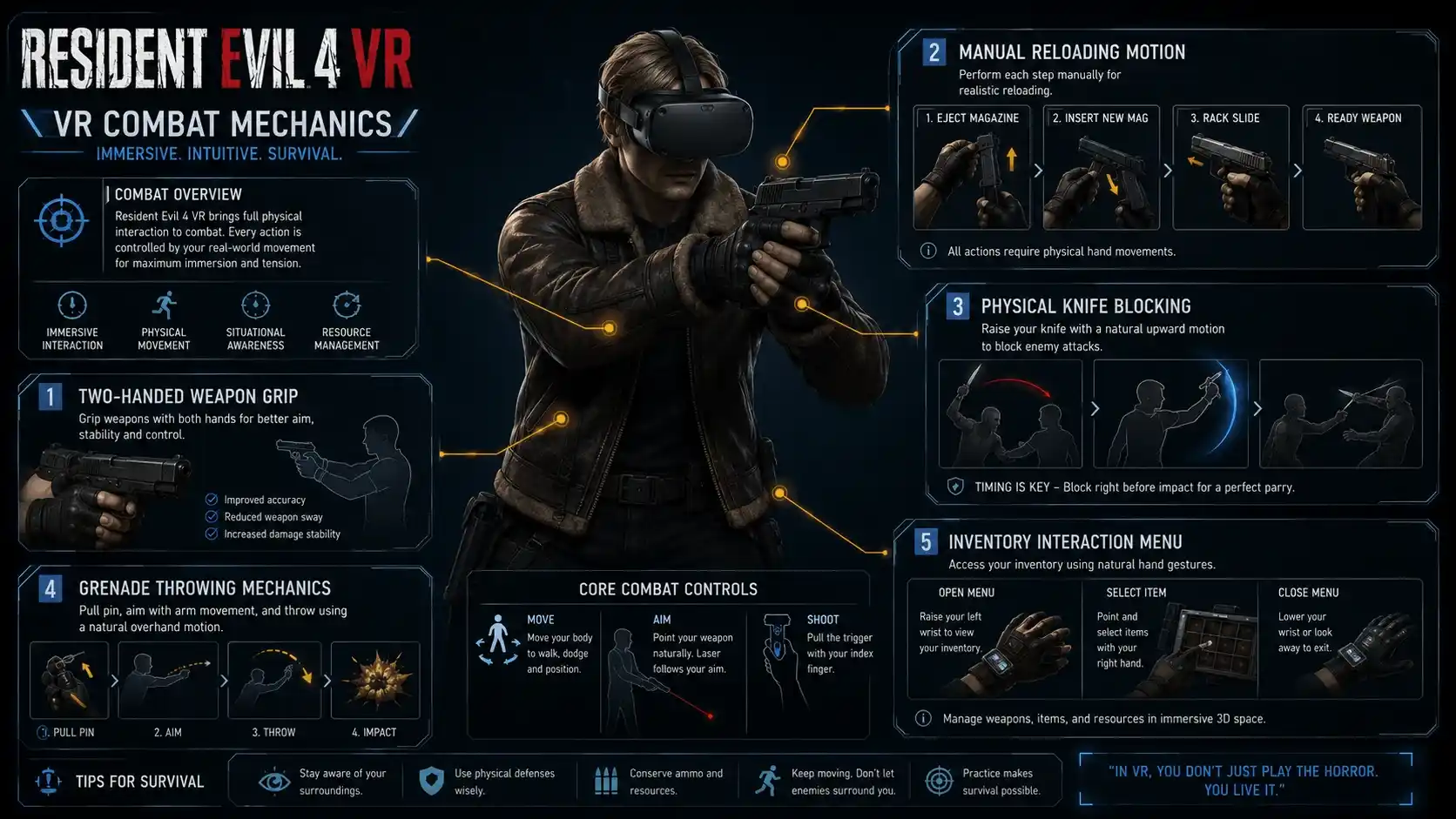
Core gameplay shifts heavily toward physical interaction. Players now manually perform actions that were previously automated or button-based.
For players interested in similarly intense, skill-based combat systems, our Demon’s Souls PS5 Review (2026): Worth Playing Now? highlights how modern hardcore difficulty design compares to immersive VR gameplay challenges.
Key systems include:
- Two-handed weapon handling for rifles and shotguns
- Real-time knife blocking and melee execution
- Physical grenade throwing and aiming adjustments
- Manual inventory access through diegetic menus
These systems significantly increase engagement but also raise the skill ceiling, particularly for new VR users.
Weapon Handling and Shooting Mechanics
Shooting mechanics in VR are based on direct hand tracking and motion controller accuracy. Unlike traditional aim-assist systems, precision depends on player stability and positioning.
Key observations:
- Head movement affects aim stability
- Ammo management feels more stressful due to manual reload timing
- Close-range encounters are more punishing due to limited reaction windows
- Weapon recoil must be physically compensated
Based on our gameplay experience, shotgun and rifle usage feels significantly more impactful in VR due to physical feedback and aiming effort.
Visual Quality and Performance Behavior
Visual performance depends heavily on platform optimization and rendering pipeline efficiency.
Typical behavior includes:
- Dynamic resolution scaling on standalone devices
- Higher texture fidelity on PC VR systems
- Occasional frame drops during heavy enemy encounters
- Stable 72–90 FPS required for comfort
Performance Table
| Setting Tier | Visual Quality | FPS Stability | Recommended Hardware |
| Low | Basic textures | High stability | Meta Quest 2 |
| Medium | Balanced visuals | Stable | Meta Quest 3 |
| High | Enhanced detail | Depends on GPU | PC VR setups |
Prime Games Arena recommends prioritizing stable frame rates over visual upgrades to reduce motion discomfort.
Immersion and Horror Intensity in VR
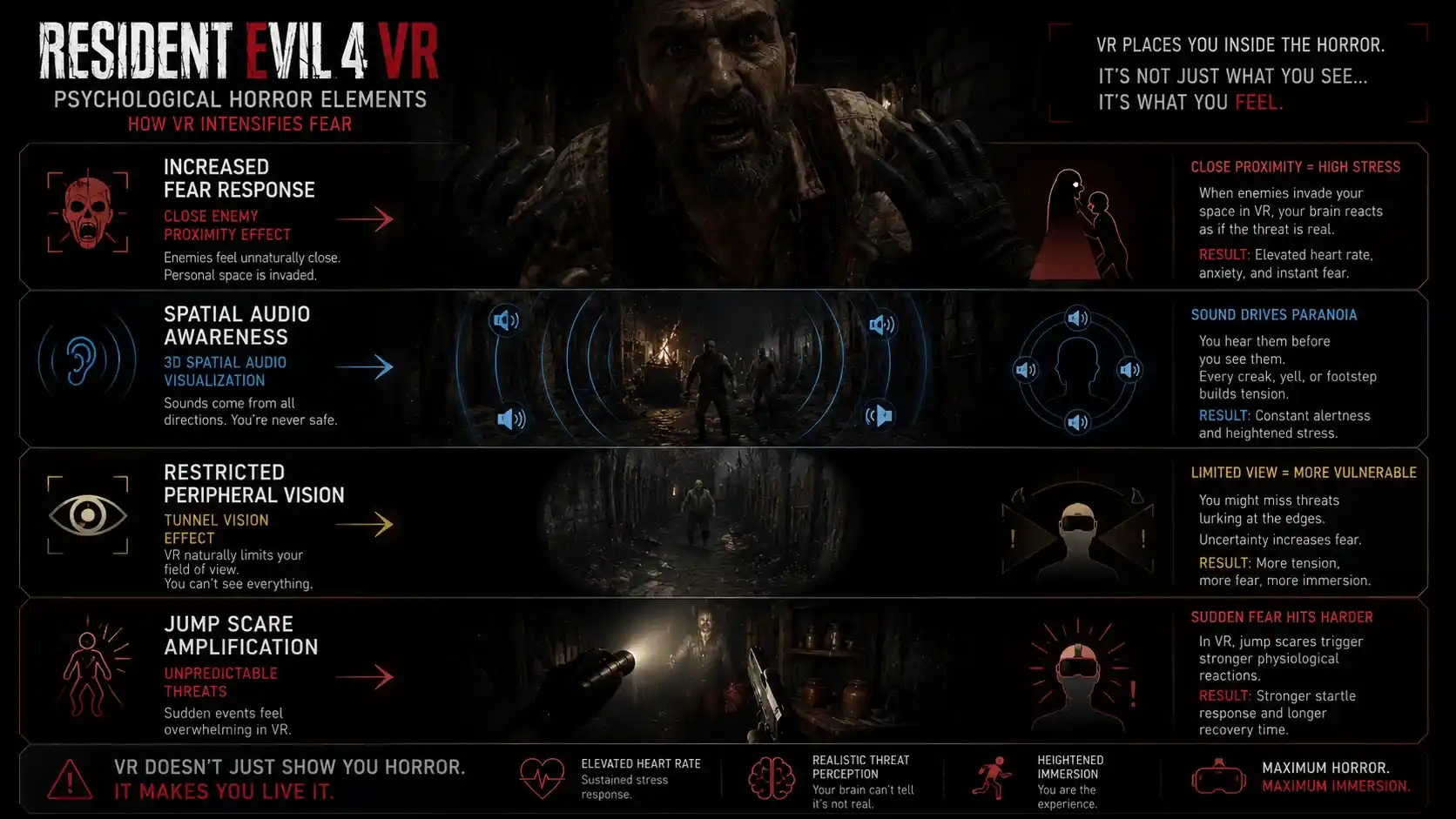
Horror intensity increases significantly due to first-person perspective and spatial audio design. Enemies feel physically closer, and environmental awareness becomes critical.
Players who enjoy modern survival horror experiences may also want to check our Resident Evil Village Review — Is RE8 Worth Playing?, which explores a more cinematic and modern approach to the same franchise.
Key immersion factors:
- 3D positional audio increases threat awareness
- Limited peripheral vision heightens tension
- Jump scares feel more immediate and personal
- Dark environments create stronger psychological pressure
Comfort Settings and Motion Sickness Considerations
VR comfort settings are essential for extended play sessions. Without proper configuration, motion sickness can occur during fast movement or combat transitions.
Common options include:
- Snap turning for reduced motion discomfort
- Vignette effects during movement
- Adjustable movement speed settings
- Height recalibration for proper perspective alignment
In our testing, snap turning combined with reduced acceleration settings provided the most stable experience for new VR players.
Campaign Length and Content Coverage
The full original campaign is included without major content cuts, maintaining the structure of the classic experience.
- Average completion time: 15–20 hours
- Longer playtime for exploration and item collection
- VR interaction naturally increases session duration
- Replay runs improve efficiency once mechanics are mastered
Version Differences: VR vs Flatscreen Editions
The VR version differs significantly from both the original and remake versions in terms of interaction design.
Key differences:
- VR: Fully immersive physical interaction system
- Original: Third-person classic survival horror design
- Remake: Modernized visuals and rebalanced gameplay systems
Comparison Highlights
- VR increases immersion but raises difficulty
- Flatscreen versions are more accessible and faster-paced
- VR requires physical engagement rather than button inputs
Common Technical Issues and Fixes
Some performance and usability issues may occur depending on hardware setup.
Issues and Solutions
- Motion sickness → enable snap turning and reduce movement speed
- Frame drops → lower resolution scaling settings
- Tracking errors → recalibrate play area boundaries
- Controller fatigue → adjust grip sensitivity and rest intervals
Recent updates have improved performance stability on standalone headsets, especially in combat-heavy zones.
Beginner Mistakes in VR Combat
New players often struggle with VR-specific mechanics that differ from traditional gameplay.
Common mistakes:
- Over-aiming instead of controlled movement
- Ignoring spatial positioning during enemy rushes
- Poor ammo conservation habits
- Not using melee opportunities effectively
These issues typically reduce efficiency and increase resource pressure during mid-game progression.
Replay Value and Long-Term Engagement
Replayability remains strong due to difficulty scaling and mechanical mastery progression.
Key replay factors:
- Multiple difficulty settings
- Weapon upgrade optimization paths
- Skill improvement through VR familiarity
- Faster completion times in subsequent runs
As players become more comfortable, the experience becomes significantly smoother and more strategic.
Conclusion
Resident Evil 4 VR review demonstrates that the adaptation successfully transforms a legendary survival horror game into one of the most immersive VR experiences available today. While hardware differences affect performance and comfort, the core gameplay remains intact and highly engaging. The combination of physical interaction and atmospheric design makes this version stand out in the VR library.
Based on our gameplay experience, this title remains a benchmark for how classic games can be reimagined for modern immersive platforms.
FAQs
1. Is Resident Evil 4 VR worth playing today?
Yes, it remains one of the strongest VR adaptations due to its full campaign integration and immersive interaction design.
2. How scary is this VR version compared to flatscreen?
The VR version is significantly more intense due to first-person perspective and spatial audio.
3. Does the game include the full story mode?
Yes, the entire original campaign is playable in VR without major cuts.
4. What platforms run the VR version best?
PC VR and PSVR2 offer higher fidelity, while Meta Quest devices prioritize portability.
5. Can VR gameplay cause motion sickness?
Yes, but comfort settings like snap turning and reduced movement speed can minimize it.
6. Is Resident Evil 4 VR good for beginners?
It can be challenging due to manual controls, but accessibility settings help ease the learning curve.