Introduction
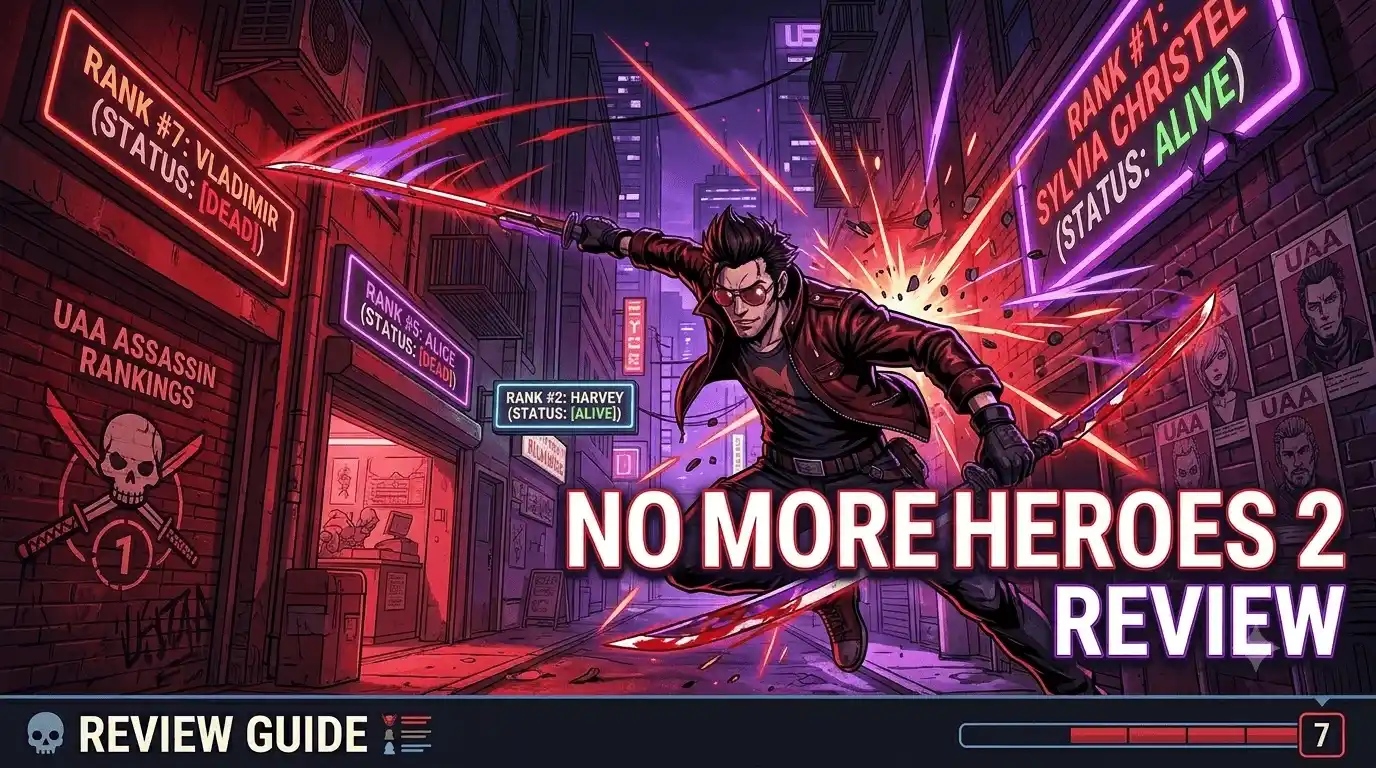
No More Heroes 2 review coverage focuses on a fast-paced hack-and-slash sequel that builds on the original’s surreal assassin ranking concept. This entry refines combat speed, reduces downtime, and emphasizes boss encounters as its main attraction. Developed by Grasshopper Manufacture under Goichi Suda (Suda51), the game is widely recognized for its exaggerated tone, stylistic violence, and arcade-like structure.
This review is part of our broader coverage in The Complete Game Reviews Hub, where we analyze modern and classic games across all major platforms.
Based on our gameplay experience at Prime Games Arena, the title stands out more for its combat rhythm than narrative cohesion. While its structure feels fragmented at times, its identity remains one of the most distinctive in action gaming history.
By Prime Games Arena | Gaming Expert & PC Performance Specialist
Quick Summary
- Faster, more aggressive combat compared to the original entry
- Boss fights remain the strongest design element
- Reduced open-world padding improves pacing
- Switch version improves accessibility but not technical consistency
Game Identity and Core Design
The game builds on the assassin ranking system introduced in the first entry from Grasshopper Manufacture. Players control Travis Touchdown, an assassin climbing rankings through ranked battles and narrative-driven encounters.
Key design pillars:
- Rank-based progression structure
- Stylized hack-and-slash combat loop
- Minimal realism with strong satire elements
- Mission-based structure instead of open-world focus
In our testing, this structure creates a more direct gameplay loop, reducing filler content and emphasizing combat encounters.
Story and Narrative Structure
The narrative follows multiple revenge-driven arcs involving assassins competing for dominance. The tone shifts rapidly between dark humor, absurd comedy, and emotional storytelling.
Key narrative characteristics:
- Fragmented storytelling structure
- Multiple antagonist-focused arcs
- Sudden tonal shifts between humor and tragedy
- Heavy reliance on surreal cutscenes
The story prioritizes personality and style over linear coherence, making it more thematic than structured.
Combat System and Core Mechanics
For players who prefer faster, roguelike-style action systems, our Dead Cells Review (2026): Is It Still Worth Playing? highlights how modern indie games refine combat pacing and replayability in a similar skill-based way.
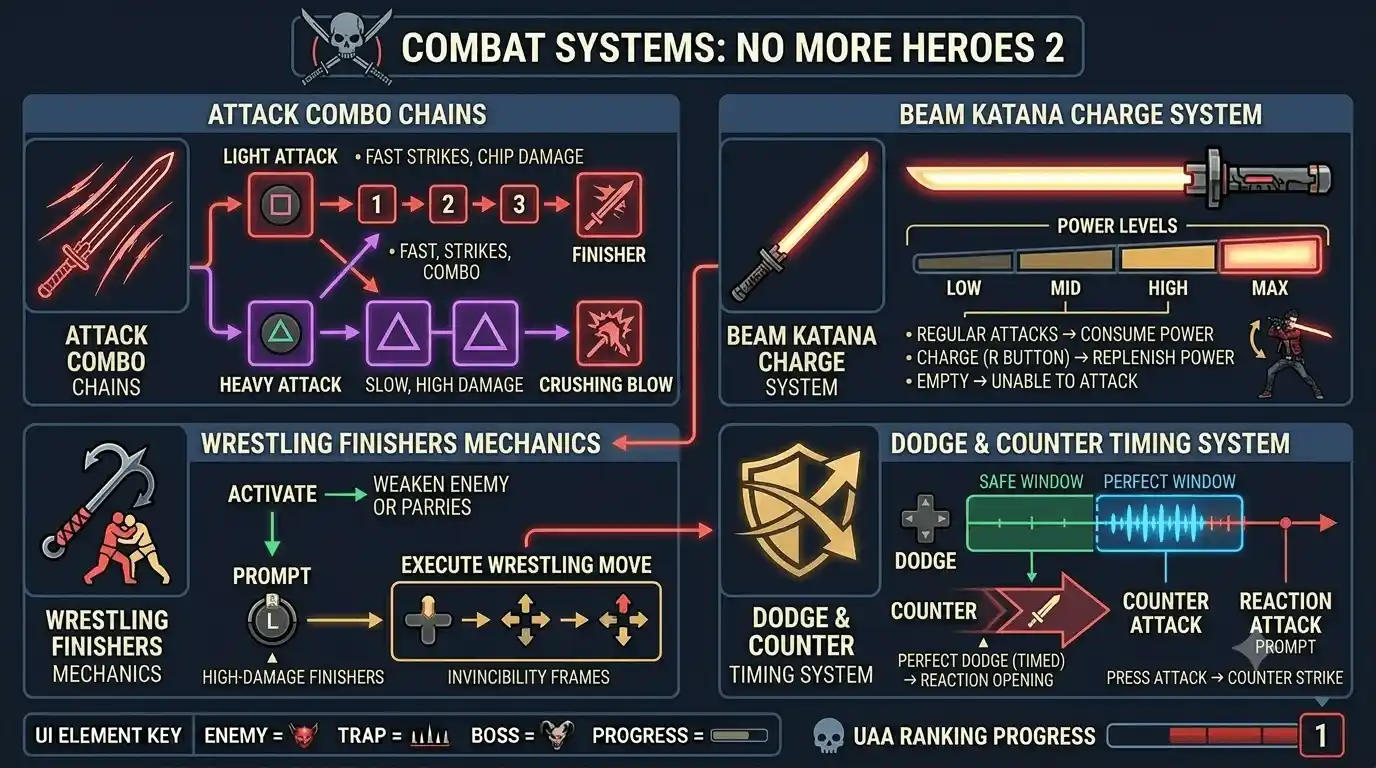
Combat is the defining feature of this release and a major improvement over the original game.
Core mechanics include:
- Light and heavy attack chaining
- Charge-based special attacks
- Wrestling-style finishing moves
- Beam katana combat system
In our gameplay sessions, combat felt significantly faster and more responsive compared to earlier design iterations. Enemy encounters are designed around aggression rather than defensive pacing.
Key strengths:
- High-impact hit feedback
- Smooth combo transitions
- Distinct enemy archetypes
Boss Battles and Difficulty Design
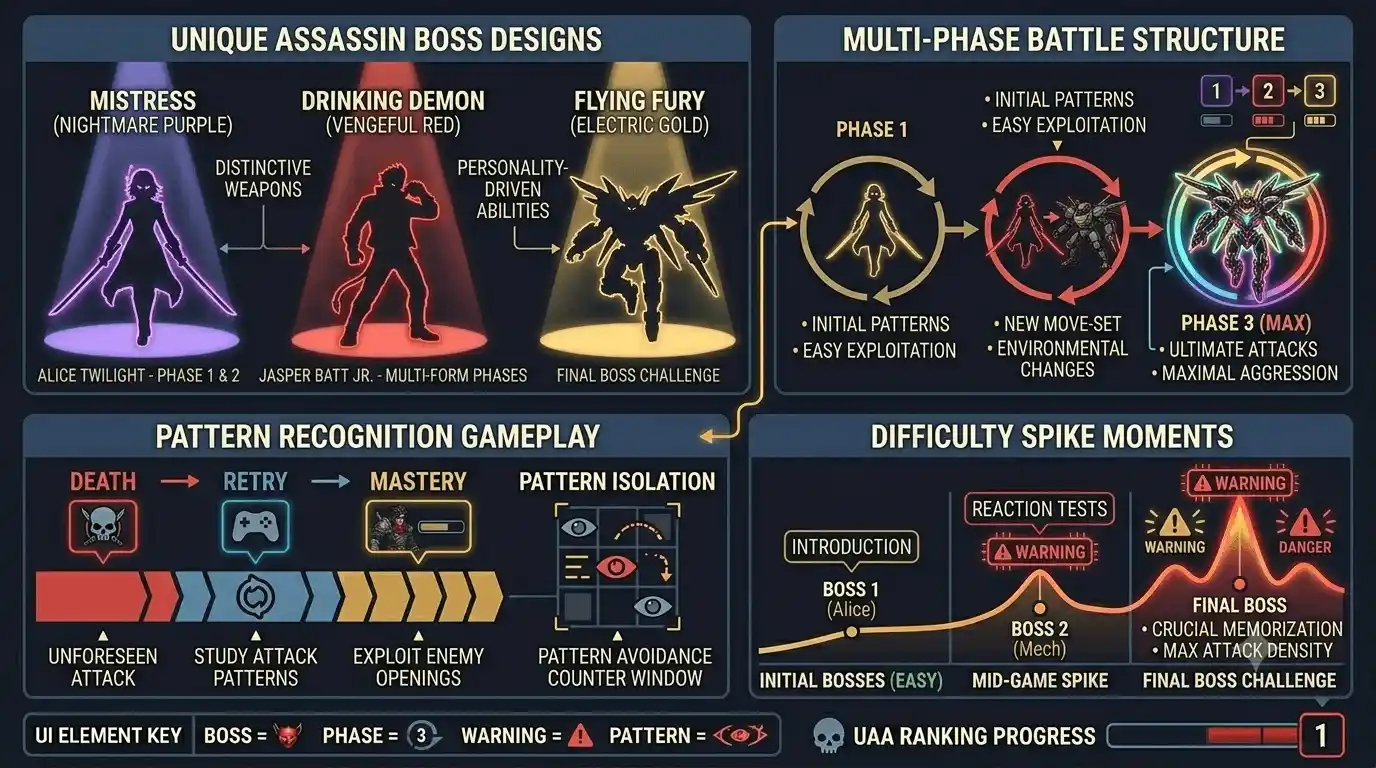
Boss encounters serve as the primary gameplay highlight. Each ranked assassin introduces a unique combat style and thematic identity.
Boss design features:
- Unique mechanics per fight
- High emphasis on spectacle
- Multi-phase encounters in select battles
Difficulty notes:
- Mid-game difficulty spikes are noticeable
- Some bosses prioritize spectacle over balance
- Learning enemy patterns is essential for progression
Controls and Modern Platform Experience
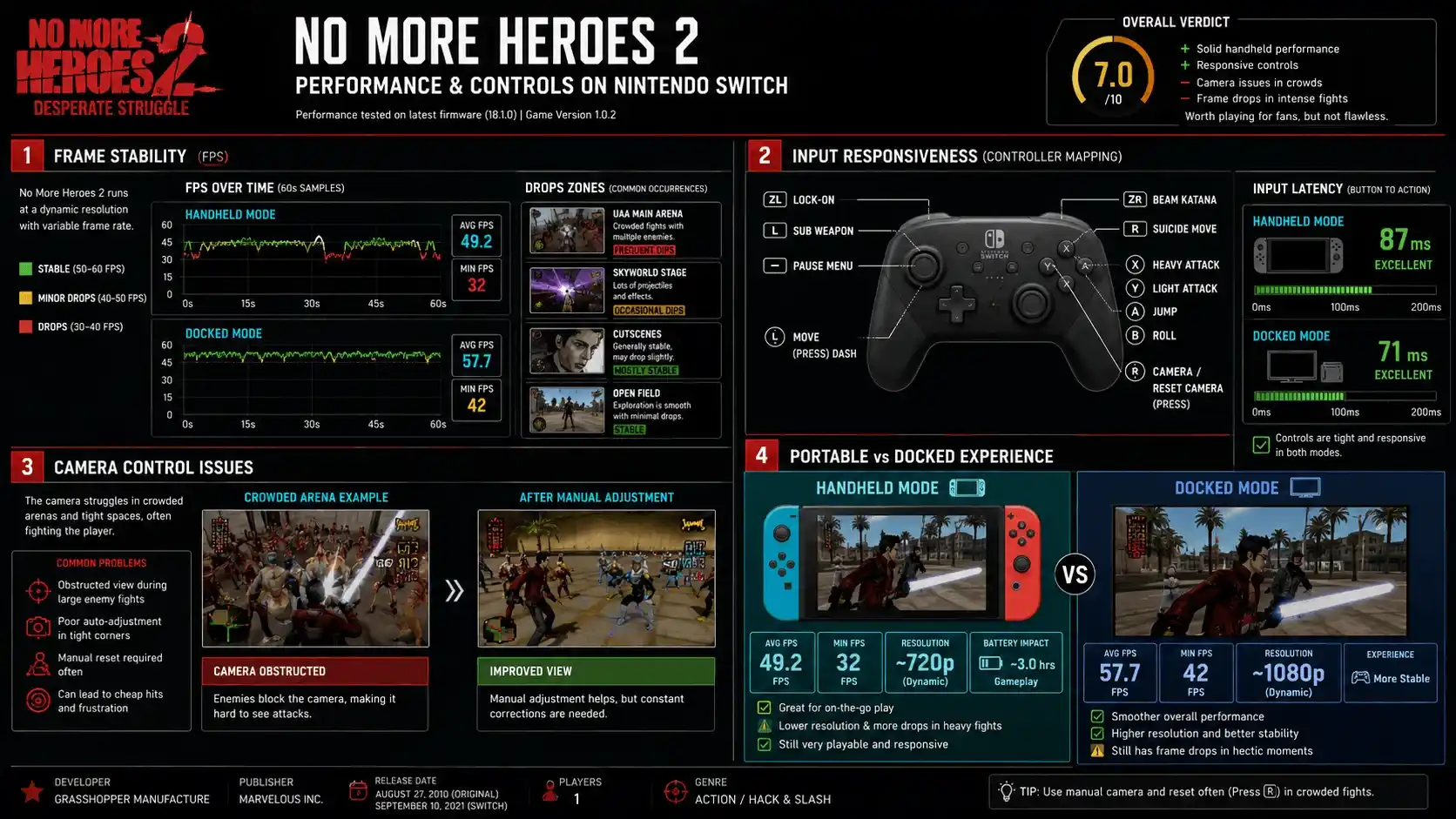
Controls remain simple and responsive, designed for arcade-style accessibility rather than deep technical complexity.
Key control elements:
- Basic combo inputs with minimal delay
- Lock-on targeting system
- Dodge-based defense mechanics
On modern systems, control responsiveness is generally stable. However, occasional camera issues appear in crowded encounters, especially during fast-paced sequences.
Prime Games Arena recommends adjusting camera sensitivity to improve combat visibility.
Visual Style and Technical Presentation
The game uses a stylized cel-shaded aesthetic that prioritizes artistic direction over realism.
Fans of retro-inspired design should also check our Shovel Knight Treasure Trove Review (2026): Worth Playing?, which showcases another modern interpretation of classic 8-bit platforming with polished gameplay systems.
Visual characteristics:
- Bold color contrast and minimalist environments
- Comic-book inspired presentation
- Heavy use of visual effects during combat
Technical notes:
- Stable performance on modern hardware
- Occasional frame dips during effect-heavy battles
- Artistic style remains consistent with Suda51 design philosophy
Performance and Switch Adaptation
The Nintendo Switch version adapts the original experience for modern portability while maintaining its core structure.
Observed performance behavior:
- Stable frame rate in most areas
- Minor dips during heavy combat effects
- Slight input delay in rare situations
In our testing, portable mode improves accessibility but does not significantly enhance visual fidelity. The experience remains faithful but technically unchanged in design limitations.
Replay Value and Progression Systems
Progression is centered around ranking up through boss battles and unlocking new abilities.
Replay elements:
- Boss fight reattempts
- Score-based mission performance
- Unlockable combat upgrades
The game does not rely heavily on side content, making replay value dependent on combat enjoyment rather than exploration systems.
Comparison With Earlier Entry
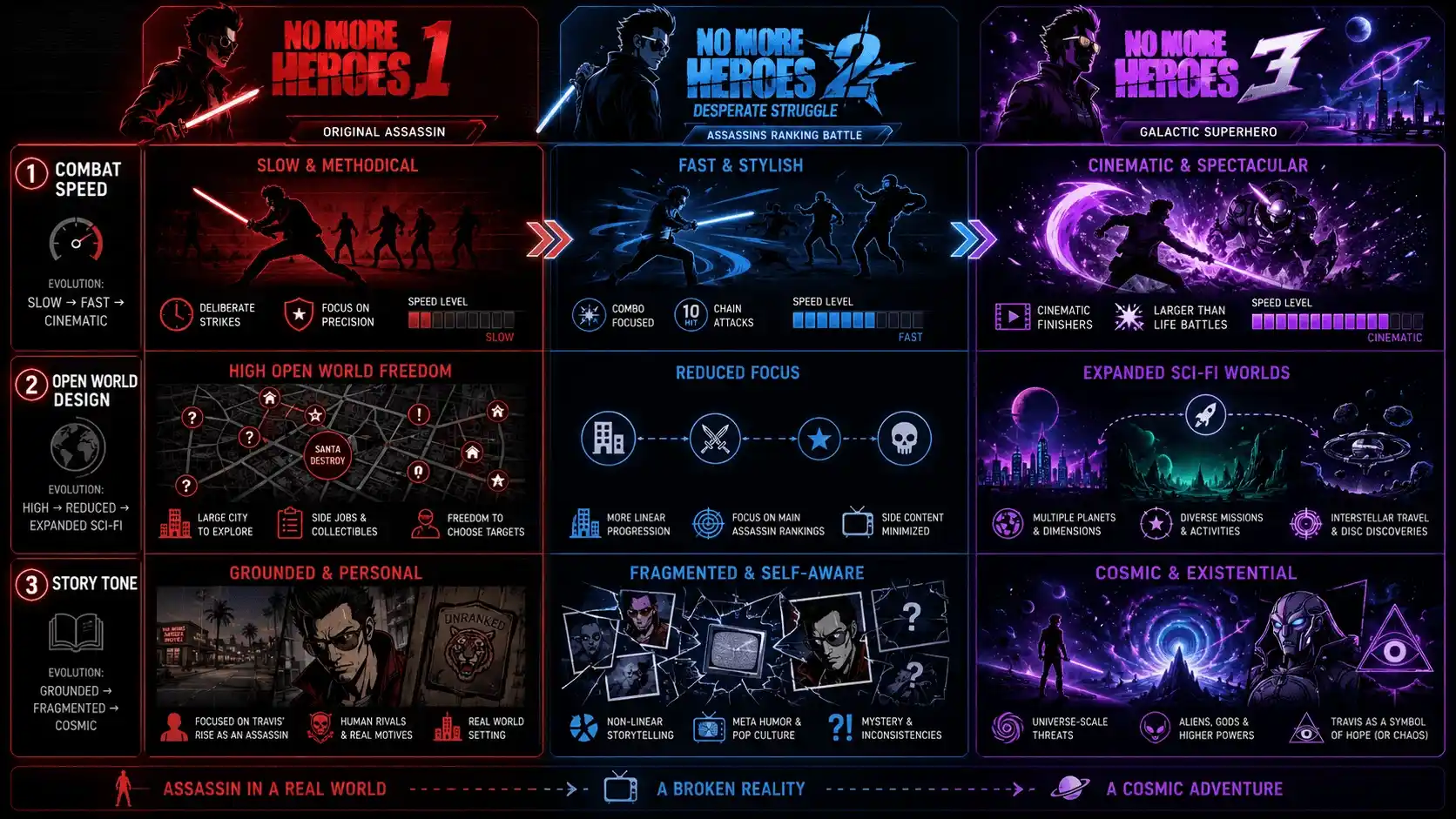
Compared to the first installment, this sequel focuses more on speed and combat refinement.
Key differences:
- Faster combat pacing
- Reduced open-world exploration
- More streamlined mission structure
- Less downtime between major fights
| Feature | First Game | This Title |
| Combat Speed | Moderate | Fast |
| Structure | Open-world heavy | Mission-focused |
| Boss Focus | High | Higher |
| Exploration | Significant | Minimal |
Comparison With Later Entry
The series evolves further in the next installment, shifting into larger-scale storytelling.
No More Heroes 3 expands the universe into a more sci-fi-driven narrative with open-world elements, contrasting sharply with this entry’s focused structure.
Key comparison points:
- Later entry emphasizes spectacle and scale
- This game emphasizes tight combat loops
- Narrative tone becomes more cosmic in later release
Gameplay Issues and Fixes
Despite strong combat design, several issues persist.
Common problems:
- Camera instability in tight arenas
- Mid-game difficulty spikes
- Occasional repetition in mission structure
Fix recommendations:
- Adjust camera sensitivity settings
- Prioritize dodge timing over blocking
- Upgrade combat abilities early for smoother progression
Based on recent play sessions, these issues remain consistent across modern releases without major patches altering core design.
Is It Worth Playing Today?
The game remains relevant due to its unique combat identity and stylized presentation. It is best suited for players who value boss-focused action and unconventional storytelling.
It may not appeal to players expecting modern AAA polish, but it still holds strong niche value in the hack-and-slash genre.
Conclusion
No More Heroes 2 review analysis shows a sequel that prioritizes speed, style, and boss-driven gameplay over structural depth. While it carries technical limitations, its combat system and artistic identity remain highly distinctive. As a result, this game continues to stand out as one of the most recognizable action titles from Grasshopper Manufacture.
In our experience at Prime Games Arena, the game is best appreciated as a stylistic action experiment rather than a traditional narrative-driven sequel. It rewards players who value mechanical flow and creative boss design.
FAQs
How long does it take to finish the game?
It typically takes 8–12 hours depending on player skill and completion rate.
Is the gameplay more difficult than the first game?
Yes, combat is faster and enemy encounters are more aggressive.
How does it run on Switch?
It runs mostly stable with occasional frame drops during heavy combat.
What makes boss fights important?
Boss fights are the main progression system and highlight unique mechanics.
Is No More Heroes 2 better than No More Heroes 3?
It depends on preference; this entry is tighter, while the later game is more expansive.