Introduction
The bloodstained curse of the moon review focuses on a retro-inspired action platformer that deliberately rejects modern Metroidvania design in favor of tight, stage-based gameplay. Developed under Koji Igarashi’s supervision at Inti Creates, the title reimagines classic 8-bit action design with modern polish, precise controls, and structured difficulty. It sits within the broader Bloodstained universe but delivers a completely different gameplay philosophy.
If you enjoy retro-inspired action platformers and skill-based gameplay, you may also like Shovel Knight Treasure Trove Review (2026): Worth Playing?, Dead Cells Review (2026): Is It Still Worth Playing?, which explore similar precision-focused design and modern retro gameplay evolution.
In our testing at Prime Games Arena, this release stands out as a deliberate throwback to NES-era design, emphasizing memorization, character switching, and pattern-based combat. The experience becomes even more refined when viewed alongside its sequel and platform performance differences.
By Prime Games Arena | Gaming Expert & PC Performance Specialist
Quick Summary
- Retro-style action platformer built around stage-based progression and character switching
- Strong inspiration from classic Castlevania design philosophy with modern refinements
- Skill-based difficulty requiring memorization of enemy patterns and boss mechanics
- Sequel significantly expands mechanics and replayability
- Nintendo Switch version offers portable convenience with minor performance trade-offs
What the Game Is and How the Series Works
This entry is a spin-off within the Bloodstained universe, designed to replicate the structure of classic 8-bit action games. Instead of exploration-heavy progression, it uses linear stages with fixed challenges and boss encounters.
The franchise connects loosely to the mainline Bloodstained: Ritual of the Night, but gameplay direction is completely different. The spin-off series later expands into Bloodstained: Curse of the Moon 2, which refines mechanics and increases replay depth.
In our gameplay analysis, the design goal is clear: recreate old-school difficulty while removing unfair randomness found in older hardware limitations.
Core Gameplay Structure and Stage Design
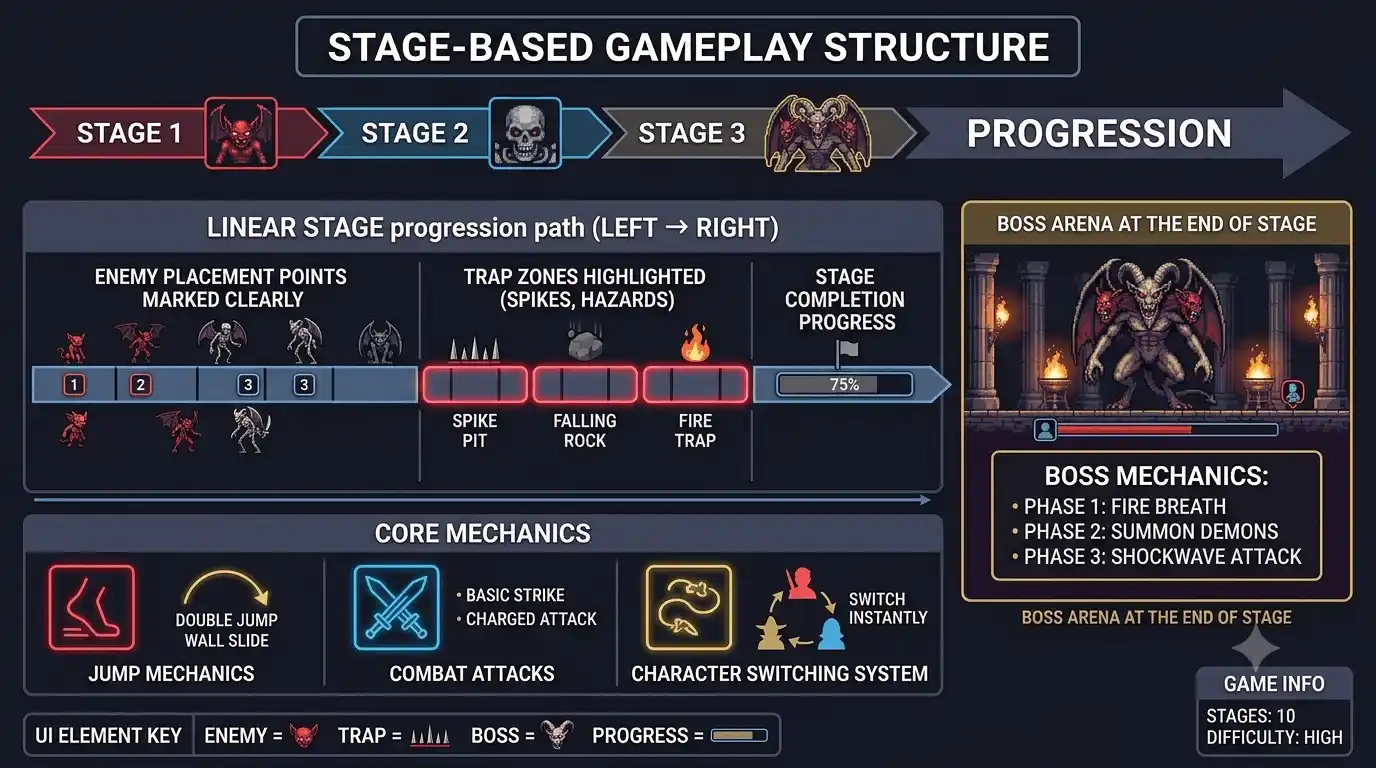
The game is structured around individual stages rather than interconnected exploration zones. Each stage is carefully designed with enemy placement, platforming hazards, and set-piece encounters.
Key structural elements:
- Linear progression with hidden branching paths
- Fixed enemy placement for memorization-based mastery
- Stage-specific hazards like traps, spikes, and environmental threats
- Boss fights that conclude each level with escalating difficulty
Based on our experience, the level design rewards repetition. Players who replay stages gain a noticeable advantage due to predictable enemy behavior patterns.
Combat System and Character Switching Mechanics
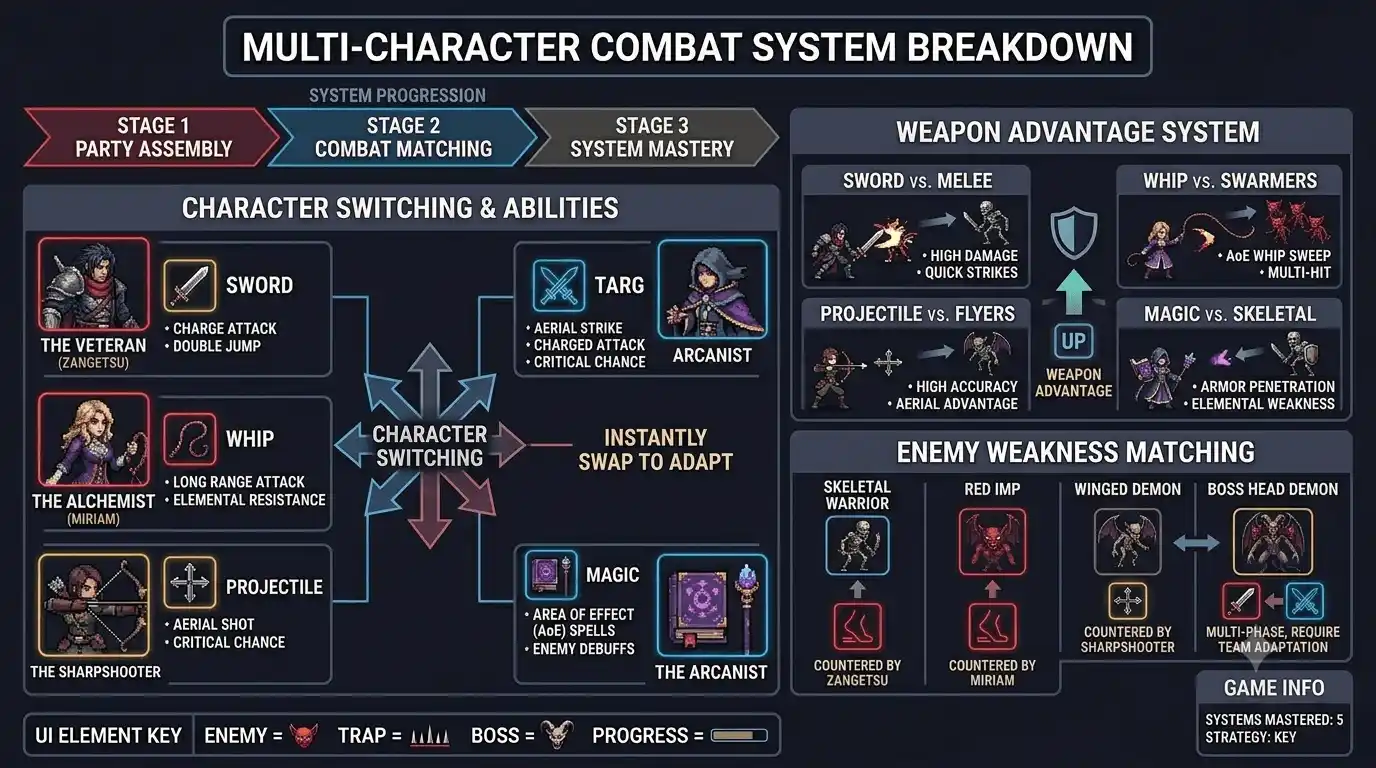
Combat is built around precise timing and character synergy. Players control multiple characters, each with unique abilities, weapons, and movement styles.
Core mechanics include:
- Melee and ranged attacks with distinct timing windows
- Sub-weapons with limited resources
- Real-time character switching for tactical advantage
- Environmental interaction using character-specific skills
The switching system is the most important mechanic. In practice, optimal gameplay requires rotating characters to handle specific enemy types or platforming segments efficiently.
Difficulty Design and Player Progression
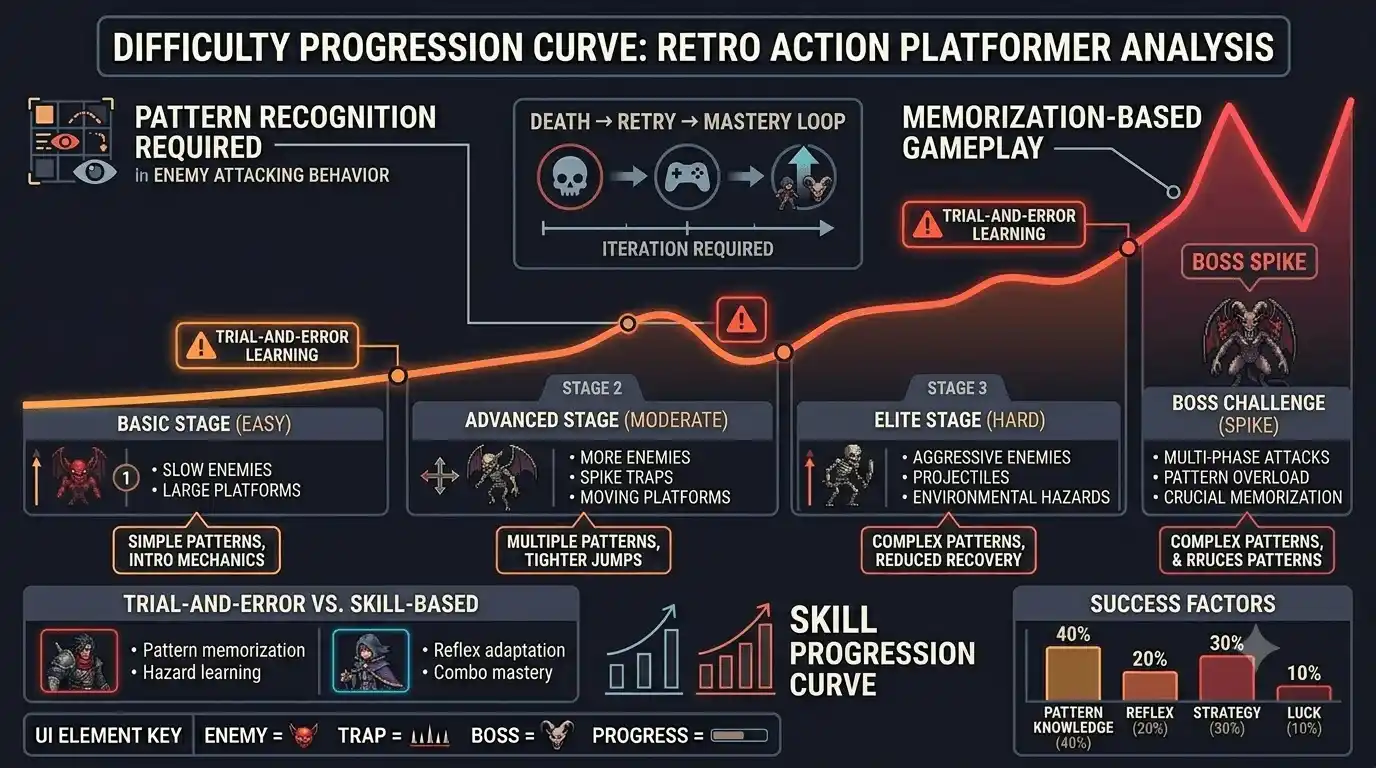
Difficulty is intentionally high and follows classic NES-inspired design philosophy. The game does not hold the player’s hand, instead requiring learning through repetition.
Key difficulty elements:
- Instant punishment for mistimed jumps or attacks
- Boss patterns that require memorization
- Limited recovery resources
- Strategic character management under pressure
Prime Games Arena recommends approaching the game as a pattern-recognition challenge rather than a casual platformer. Mistakes are part of the learning cycle rather than random failure.
Story Presentation and Narrative Approach
The narrative is minimalistic and delivered through stage progression rather than cutscene-heavy storytelling. It follows a dark fantasy structure involving demon hunters and cursed environments.
In practical terms, story takes a secondary role. Character interactions mainly serve gameplay mechanics rather than deep narrative development. The sequel expands slightly on character motivations, but the core focus remains gameplay.
Visual Style and Retro Direction
The visual design uses a heavily stylized 8-bit aesthetic with modern clarity improvements. Enemy sprites are highly readable, which is important for fast reaction gameplay.
Key visual strengths:
- Clean pixel art with strong silhouette readability
- Distinct environmental themes per stage
- Smooth animation timing for combat clarity
- Nostalgic NES-style presentation with modern resolution support
In testing, visual clarity directly impacts performance success, especially during boss encounters where timing is critical.
Audio Design and Soundtrack Impact
The soundtrack follows chiptune-inspired composition designed to reinforce tension and pacing. Music dynamically matches stage intensity and boss escalation.
Audio design highlights:
- High-tempo boss tracks for combat pressure
- Distinct sound cues for enemy attacks
- Retro-inspired composition style
- Clear audio feedback for player actions
Sound design plays a functional role rather than purely atmospheric enhancement.
Platform Performance and Switch Experience
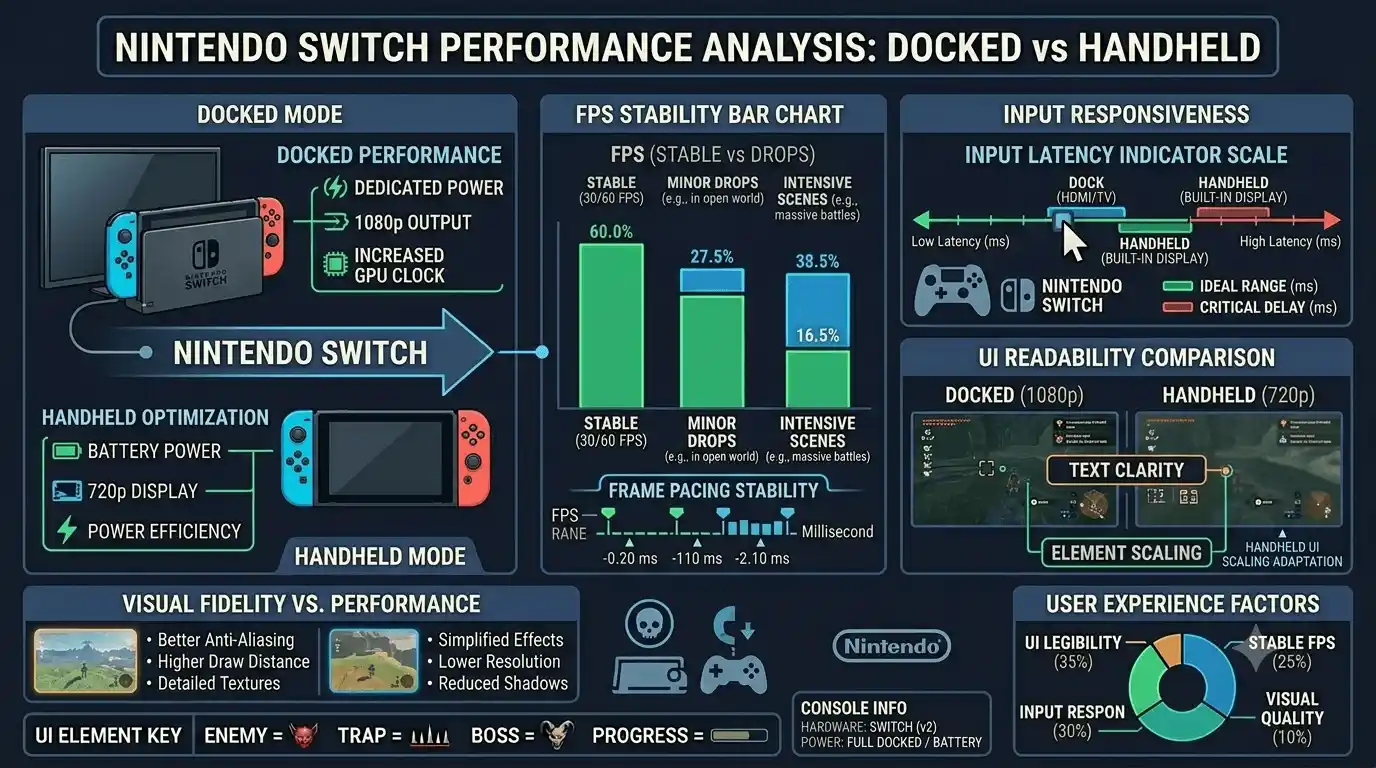
On Nintendo Switch hardware, performance is generally stable but not flawless in all scenarios. Frame pacing remains consistent in most stages, though heavy action sequences can introduce minor fluctuations.
Observed behavior on Switch:
- Stable handheld performance in standard gameplay
- Slight input latency variation in docked mode
- UI scaling remains readable in portable mode
- Occasional frame pacing dips during particle-heavy boss fights
In our testing, handheld mode provides the most consistent experience due to optimized rendering scaling.
Comparison: First Entry vs Sequel Expansion
The sequel significantly expands systems introduced in the original game.
| Feature | First Game | Sequel |
| Character System | Limited roster | Expanded team mechanics |
| Level Complexity | Linear design | Branching paths and replay depth |
| Difficulty Balance | Strict retro challenge | More refined scaling |
| Replay Value | Moderate | High with multiple endings |
The sequel clearly improves mechanical depth and replayability, making it more suitable for long-term engagement.
How It Differs From Mainline Bloodstained Games
Unlike the exploration-driven structure of Bloodstained: Ritual of the Night, this spin-off focuses entirely on stage-based action.
Players interested in broader action RPG and atmospheric design comparisons should also check Hollow Knight Reviews (2026): Is It Worth Playing Today?, Ender Lilies: Quietus of the Knights Review (2026), and Ghost of Tsushima Review & Rating (PS4, PS5, PC) to see how modern action games balance exploration, difficulty, and storytelling.
Key differences:
- No open-world exploration
- No RPG leveling systems
- No map backtracking mechanics
- Pure skill-based progression
This makes the experience closer to classic Castlevania-style design rather than modern Metroidvania structure.
Common Issues and Fixes
Players may encounter several recurring challenges:
Input timing issues
- Cause: strict enemy timing windows
- Fix: adjust controller sensitivity and reduce input delay settings
Difficulty spikes
- Cause: boss pattern escalation
- Fix: learn switching mechanics for optimal damage cycles
Platforming errors
- Cause: rigid jump physics
- Fix: practice stage repetition to internalize spacing
From experience, most frustration comes from misunderstanding pattern-based gameplay rather than technical flaws.
Hidden Design Depth Most Players Miss
Beyond surface-level difficulty, the game includes deeper design systems:
- Enemy placement teaches adaptive movement strategies
- Character switching creates layered tactical decision-making
- Stage replay reveals alternate optimization paths
- Boss fights reward precise rhythm control rather than aggression
These systems are often overlooked in early playthroughs but become clear with repetition.
What Makes This Series Stand Out
The series stands out due to its commitment to authentic retro design without modern simplification. Unlike many indie platformers, it does not reduce difficulty for accessibility but instead refines challenge through clarity and fairness.
It successfully blends:
- Retro NES structure
- Modern responsiveness
- Tactical character switching
- High replay incentive
Pros and Cons Breakdown
Pros
- Tight and responsive combat system
- Strong retro authenticity
- Clear and readable visual design
- High skill ceiling and replay value
Cons
- Steep learning curve for new players
- Limited exploration compared to modern platformers
- Occasional performance inconsistencies on Switch
Conclusion
This game successfully delivers a focused retro action experience that prioritizes precision, memorization, and mechanical mastery over exploration or narrative depth. In this bloodstained curse of the moon review, the title proves itself as a faithful tribute to classic design philosophy while offering enough modern refinement to remain relevant today.
For players who enjoy structured difficulty and pattern-based combat, it remains a standout entry in the franchise.
FAQs
- What type of game is this series?
It is a stage-based retro action platformer focused on precision combat and platforming. - How difficult is the game for beginners?
It is challenging and requires learning enemy patterns and stage layouts. - How does the sequel improve gameplay?
The sequel expands character systems, replayability, and stage complexity. - Is performance good on Nintendo Switch?
Yes, though minor frame pacing issues may appear during intense action. - How is this different from modern Metroidvania games?
It uses linear stage progression instead of exploration-based design.