Introduction
Yomawari Lost in the Dark Review examines the third entry in Nippon Ichi Software’s atmospheric horror franchise. Released for Nintendo Switch, PlayStation 4, and PC, this survival horror adventure combines exploration, stealth, puzzle-solving, and psychological storytelling. Rather than focusing on combat, the game challenges players to navigate a haunting supernatural town while avoiding dangerous spirits and uncovering forgotten memories. Its unique art style and unsettling atmosphere help it stand out in a crowded horror genre, making it one of the most distinctive indie horror experiences available today.
By Prime Games Arena | Gaming Expert & PC Performance Specialist
Quick Summary
- A psychological horror adventure focused on atmosphere, exploration, and stealth.
- Features memorable creature designs inspired by Japanese folklore.
- Delivers strong storytelling through environmental details and symbolic themes.
- Offers solid performance across Switch, PS4, and PC platforms.
- Best suited for players who enjoy tension and exploration rather than combat-heavy horror.
What Is Yomawari: Lost in the Dark?
The game belongs to the survival horror genre, which is defined as a subgenre of horror video games focused on resource management and psychological tension, as described in the broader context of survival horror on Wikipedia.
Story Premise and Setting
The game follows a young girl who awakens in a mysterious dark forest with no memory of how she arrived there. After encountering a strange being, she learns that she has lost important memories and must recover them before dawn.
The adventure takes place in an eerie town filled with supernatural entities. As players explore abandoned streets, parks, schools, and shrines, they gradually uncover pieces of the protagonist’s forgotten past.
Unlike many modern horror titles, the narrative relies heavily on environmental storytelling rather than lengthy dialogue sequences.
Where It Fits in the Series
This release serves as the third major installment in the franchise.
Series order:
- Yomawari: Night Alone
- Yomawari: Midnight Shadows
- Yomawari: Lost in the Dark
While each game tells a largely standalone story, they share similar themes of loneliness, childhood fears, and supernatural folklore.
Players can begin with this installment without prior knowledge of previous entries, although longtime fans will appreciate recurring design elements and references.
Yomawari Lost in the Dark Review
What the Game Does Well
The strongest aspect of this title is its atmosphere.
The combination of hand-drawn visuals, limited lighting, ambient sound effects, and unsettling creature encounters creates a constant sense of tension. Rather than relying on action sequences, the game encourages careful exploration and observation.
Based on our gameplay experience, the world feels consistently threatening despite the simple controls and minimalistic presentation.
Other strengths include:
- Unique art direction
- Strong environmental storytelling
- Effective sound design
- Memorable creature encounters
- Emotional narrative themes
Areas That May Frustrate Players
Some players may find navigation confusing, especially during later sections.
Objectives are not always clearly marked, which can result in extended backtracking. Certain stealth encounters also require trial-and-error learning before players understand enemy movement patterns.
Common complaints include:
- Limited guidance
- Occasional pacing issues
- Repetitive exploration loops
- Difficulty spikes during chase sequences
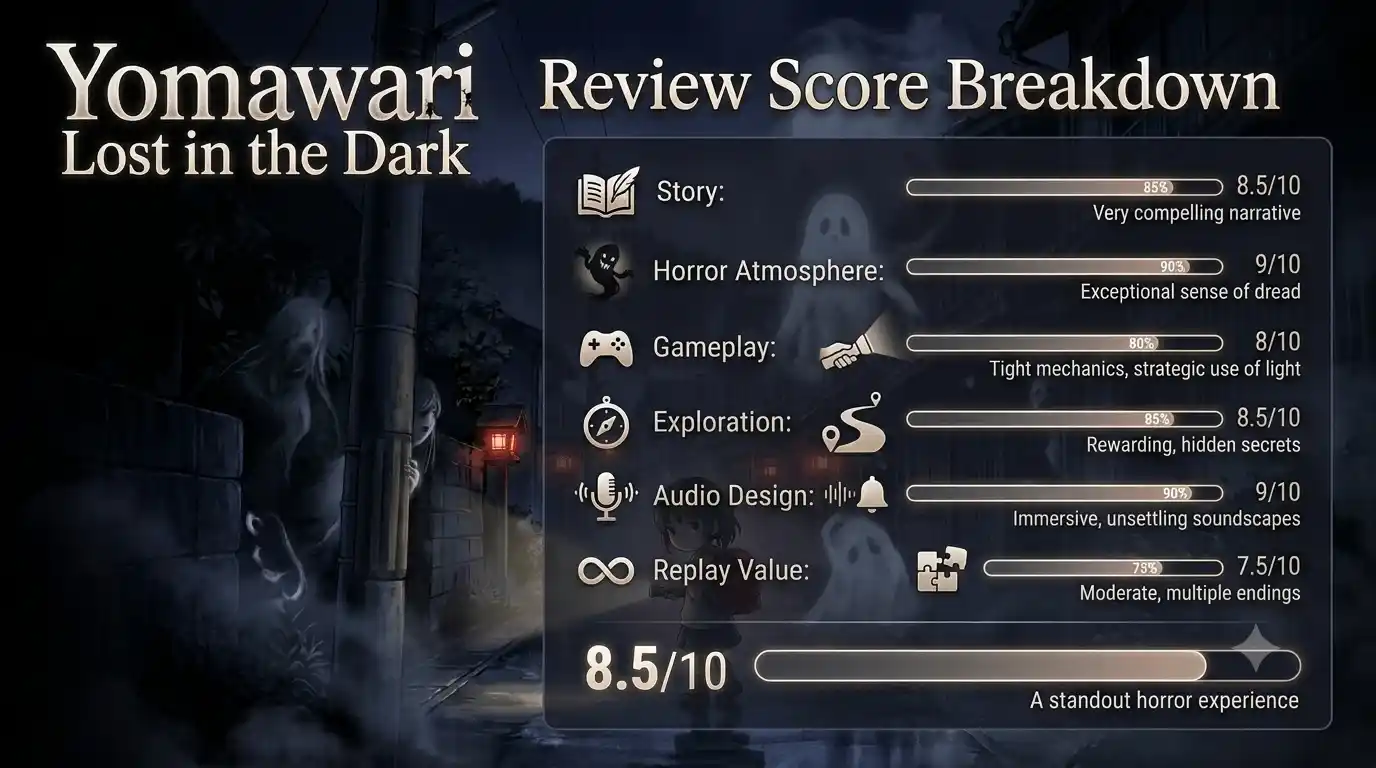
Overall Rating Breakdown
| Category | Score |
| Story | 8.5/10 |
| Horror Atmosphere | 9/10 |
| Gameplay | 8/10 |
| Exploration | 8.5/10 |
| Audio Design | 9/10 |
| Replay Value | 7.5/10 |
| Overall | 8.5/10 |
Gameplay Mechanics Explained
Exploration and Progression
Progression revolves around locating memory fragments scattered throughout the town.
Players gradually unlock new areas while solving environmental puzzles and interacting with important objects. Exploration is rewarded through hidden collectibles and optional discoveries that provide additional context for the story.
Stealth and Spirit Encounters
Combat is largely absent.
Instead, players must avoid hostile spirits using stealth mechanics and environmental awareness.
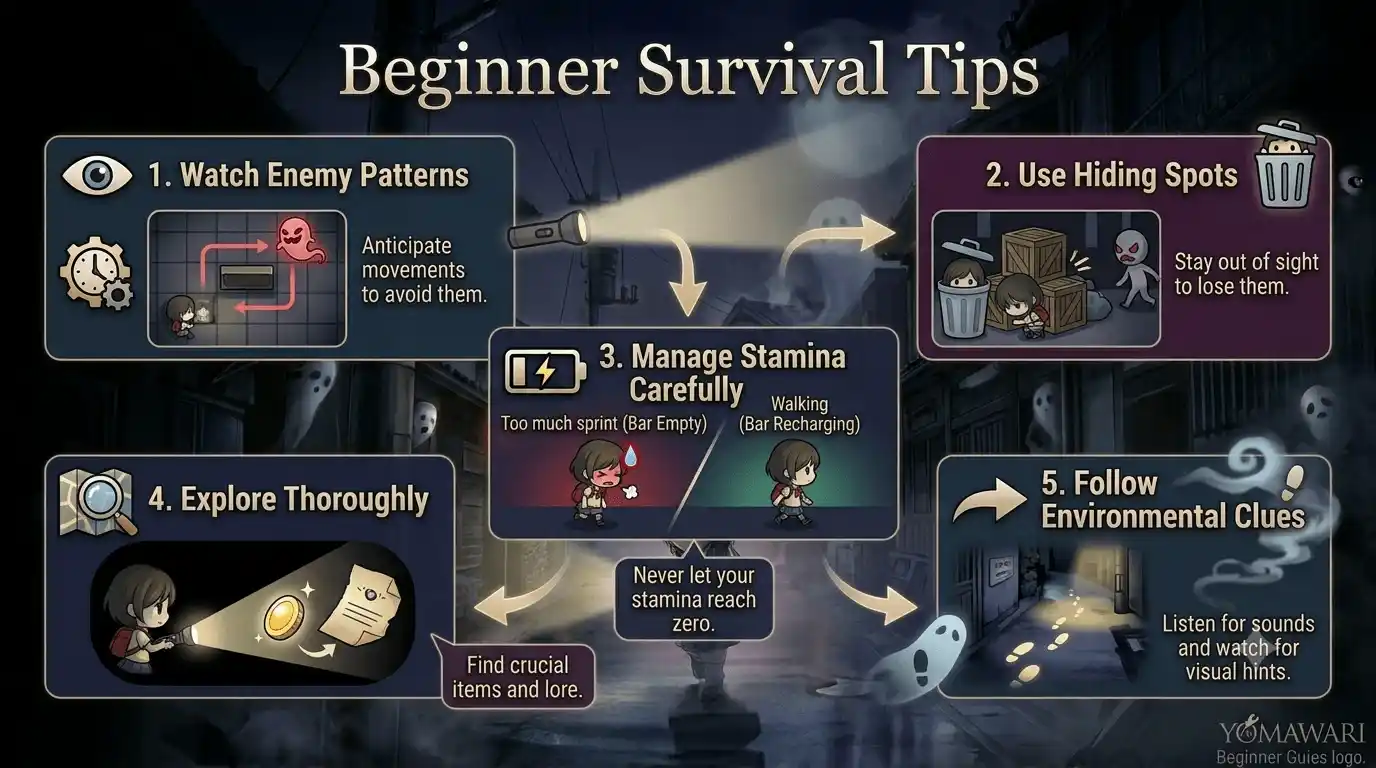
Key survival techniques include:
- Watching enemy patrol routes
- Using hiding spots effectively
- Listening for audio cues
- Conserving stamina during escapes
Prime Games Arena recommends moving cautiously in unfamiliar areas, as many encounters punish reckless exploration.
Puzzle Design and Environmental Interaction
Puzzles generally focus on observation rather than complexity.
Players must examine surroundings carefully, connect clues, and revisit locations as new information becomes available.
Most challenges support narrative progression while maintaining immersion within the game’s horror setting.
Does the Horror Actually Work?

Psychological Horror Elements
Yes. The horror succeeds primarily through psychological tension rather than direct confrontation.
Dark environments, unsettling sounds, isolation, and uncertainty create persistent anxiety throughout the experience.
The game frequently uses anticipation instead of immediate threats, allowing fear to build naturally.
Does Yomawari Have Jump Scares?
Yes, but jump scares are not the primary source of horror.
Most frightening moments come from unexpected spirit appearances, eerie environmental details, and sudden changes in atmosphere.
Compared with mainstream horror franchises, jump scares are used more sparingly and effectively.
Creature Design and Supernatural Encounters
The supernatural entities are heavily inspired by Japanese folklore and urban legends.
Many creatures feature unusual shapes, distorted movements, and unsettling behaviors that make encounters memorable without relying on graphic violence.
This approach contributes significantly to the game’s unique identity.
Story Analysis and Ending Explained
Themes Behind the Narrative
The narrative explores themes including:
- Memory
- Loss
- Grief
- Personal identity
- Emotional recovery
These themes are integrated naturally into both gameplay and environmental storytelling.
As memories are recovered, players gain a deeper understanding of the protagonist’s emotional journey.
Ending Interpretation
Spoiler Warning
The conclusion reveals the significance of the protagonist’s forgotten memories and reframes many earlier events.
Rather than focusing solely on supernatural explanations, the ending emphasizes emotional healing and self-acceptance.
Many symbolic elements throughout the adventure become clearer after the final revelations, encouraging discussion among players.
Performance and Platform Experience
For players interested in how performance varies across hardware setups, our detailed guide on What PC Parts Affect Gaming the Most? (Complete FPS Performance Guide) explains how CPU, GPU, and RAM influence gaming stability.
Nintendo Switch Experience
The Switch version performs well in both handheld and docked modes.
Visual clarity remains strong despite the platform’s hardware limitations, and the slower gameplay pace helps maintain stable performance.
PlayStation 4 Version
The PS4 edition delivers consistent frame rates and reliable loading times.
Controls feel responsive, and the darker visual presentation works particularly well on larger displays.
PC and Steam Availability
The PC version offers the greatest flexibility.
Players can adjust:
- Resolution
- Frame rate
- Display settings
- Input configurations
In our testing, modern mid-range hardware handled the game comfortably without significant performance issues.
Platform Comparison
| Platform | Performance | Graphics | Recommended |
| Switch | Good | Good | Yes |
| PS4 | Very Good | Very Good | Yes |
| PC | Excellent | Excellent | Best Option |
Freshness Note: As of 2026, the latest available game version remains stable across all major platforms with no widespread performance concerns reported by players.
Common Challenges and Beginner Mistakes
Similar navigation and exploration issues are also common in other atmospheric titles, which we break down in Is Firewatch a Good Game? An Honest Review (2025) where environmental storytelling plays a key role in pacing and player guidance.
Why Players Get Lost
The game’s open exploration structure can occasionally make objectives unclear.
Players often overlook environmental clues or fail to revisit previously inaccessible areas.
Tips for Surviving Dangerous Areas
Useful strategies include:
- Move slowly when entering unfamiliar zones.
- Learn enemy movement patterns.
- Use hiding spots proactively.
- Avoid sprinting unnecessarily.
How to Progress More Efficiently
To reduce frustration:
- Check maps frequently.
- Explore thoroughly before leaving an area.
- Pay attention to environmental details.
- Return to earlier locations after major story events.
Based on our gameplay experience, careful observation solves most progression issues more effectively than random exploration.
How Long Does It Take to Beat?
Main Story Completion Time
Most players finish the main campaign in approximately 8–10 hours.
Completionist Playthrough
Collecting all optional content and discoveries typically extends playtime to around 12–15 hours.
Replay Value After Finishing
Replay value comes primarily from:
- Collectible hunting
- Story interpretation
- Achievement completion
- Discovering missed details
| Play Style | Estimated Hours |
| Main Story | 8–10 |
| Main + Side Content | 10–12 |
| Completionist | 12–15 |
How It Compares to Other Entries
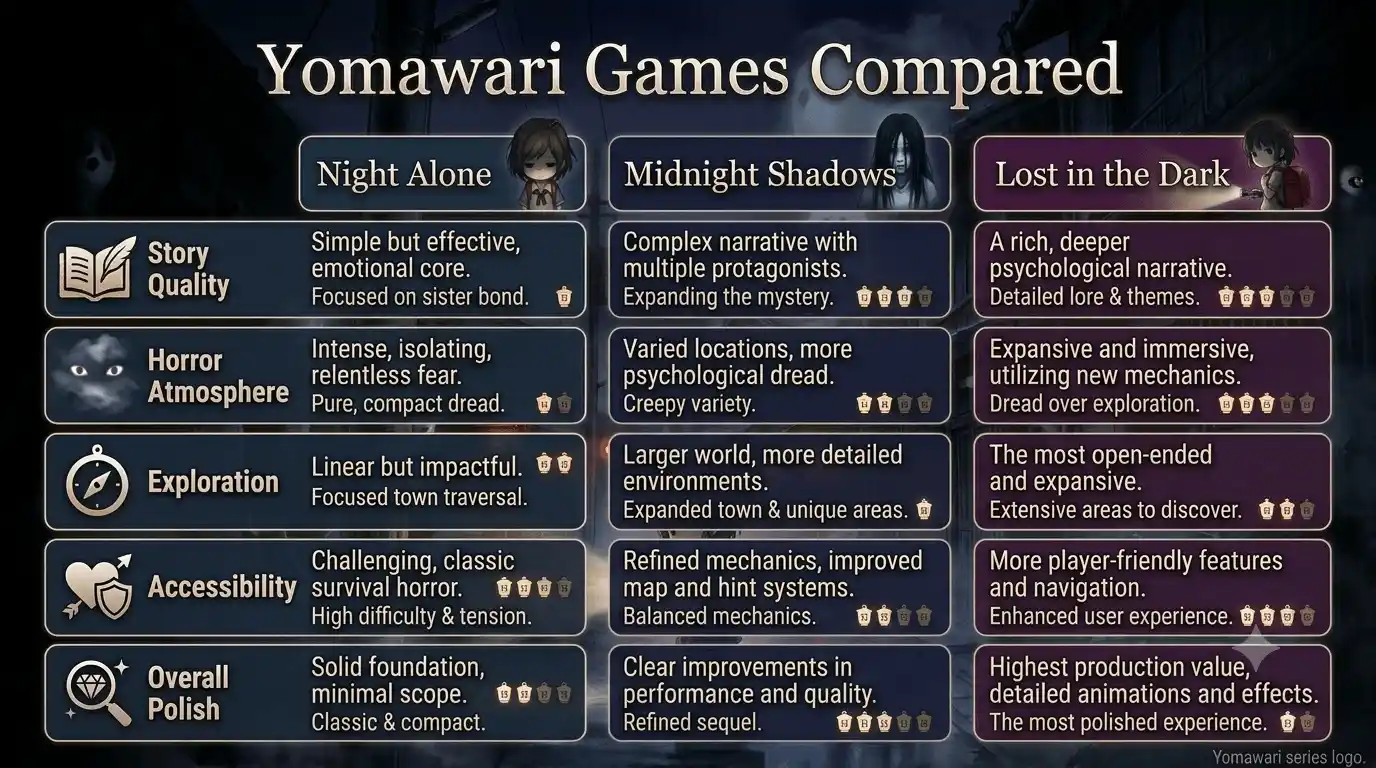
Comparison With Night Alone
The original game established the formula but features simpler mechanics and a smaller scope.
Comparison With Midnight Shadows
The second installment expanded storytelling and introduced multiple protagonists.
Which Entry Is Best for New Players?
For newcomers:
| Feature | Night Alone | Midnight Shadows | Lost in the Dark |
| Story | Good | Very Good | Excellent |
| Horror | Good | Very Good | Excellent |
| Exploration | Moderate | Strong | Strongest |
| Accessibility | Moderate | Good | Best |
The third installment is generally the most polished and accessible entry for first-time players.
Community Reception and Long-Term Appeal
For more horror-focused experiences with strong psychological elements, you can also explore DreadOut Game Review: Is This Horror Game Worth Playing?, which shares similar tension-driven gameplay design.
What Players Praise Most
Community discussions consistently highlight:
- Atmosphere
- Art style
- Emotional storytelling
- Sound design
- Creature variety
Common Criticisms From Players
The most frequent criticisms involve:
- Navigation difficulties
- Occasional backtracking
- Lack of combat options
- Uneven pacing
How Opinions Have Changed Since Launch
Reception has become increasingly positive over time.
Many players now consider this release the strongest entry in the franchise due to its refined gameplay systems and storytelling improvements.
Is It Worth Playing Today?
Who Will Enjoy It Most
This game is ideal for:
- Psychological horror fans
- Exploration-focused players
- Story-driven gamers
- Fans of Japanese horror themes
Who May Want Something Different
Players seeking:
- Fast-paced action
- Extensive combat
- Multiplayer content
may find the experience slower than expected.
Final Recommendation
Prime Games Arena recommends this title to anyone interested in atmospheric horror adventures.
Its combination of storytelling, exploration, and psychological tension creates a memorable experience that remains relevant years after release.
Conclusion
Yomawari Lost in the Dark Review demonstrates why this installment is considered one of the strongest entries in the franchise. Its atmospheric world, effective psychological horror, memorable creature design, and emotionally driven narrative deliver a compelling experience from start to finish. While navigation issues and occasional pacing problems may frustrate some players, the overall package remains highly recommended for fans of exploration-focused horror games. Those seeking tension, mystery, and strong environmental storytelling will find considerable value in this adventure.
For more detailed breakdowns of modern and classic titles, you can explore our full collection in the The Complete Game Reviews Hub, where we analyze performance, gameplay depth, and long-term value across major gaming franchises.
Frequently Asked Questions
What kind of game is Yomawari Lost in the Dark Review?
It is a survival horror adventure focused on exploration, stealth, puzzle-solving, and psychological storytelling rather than combat.
Is Yomawari a good horror series for beginners?
Yes. The franchise emphasizes atmosphere and tension, making it accessible to players who may not enjoy more intense survival horror games.
Does the game rely heavily on jump scares?
No. Most of the horror comes from atmosphere, sound design, and unpredictable supernatural encounters.
How long does the main story take to finish?
Most players complete the story in approximately 8–10 hours depending on exploration habits.
Do I need to play previous entries first?
No. Each installment tells a largely standalone story, although returning players may notice references and recurring themes.
Which platform offers the best experience?
PC generally provides the best visual quality and flexibility, though Switch and PS4 versions also perform well.
Is there replay value after completing the story?
Yes. Players can pursue collectibles, achievements, hidden details, and alternative interpretations of the narrative.