Introduction
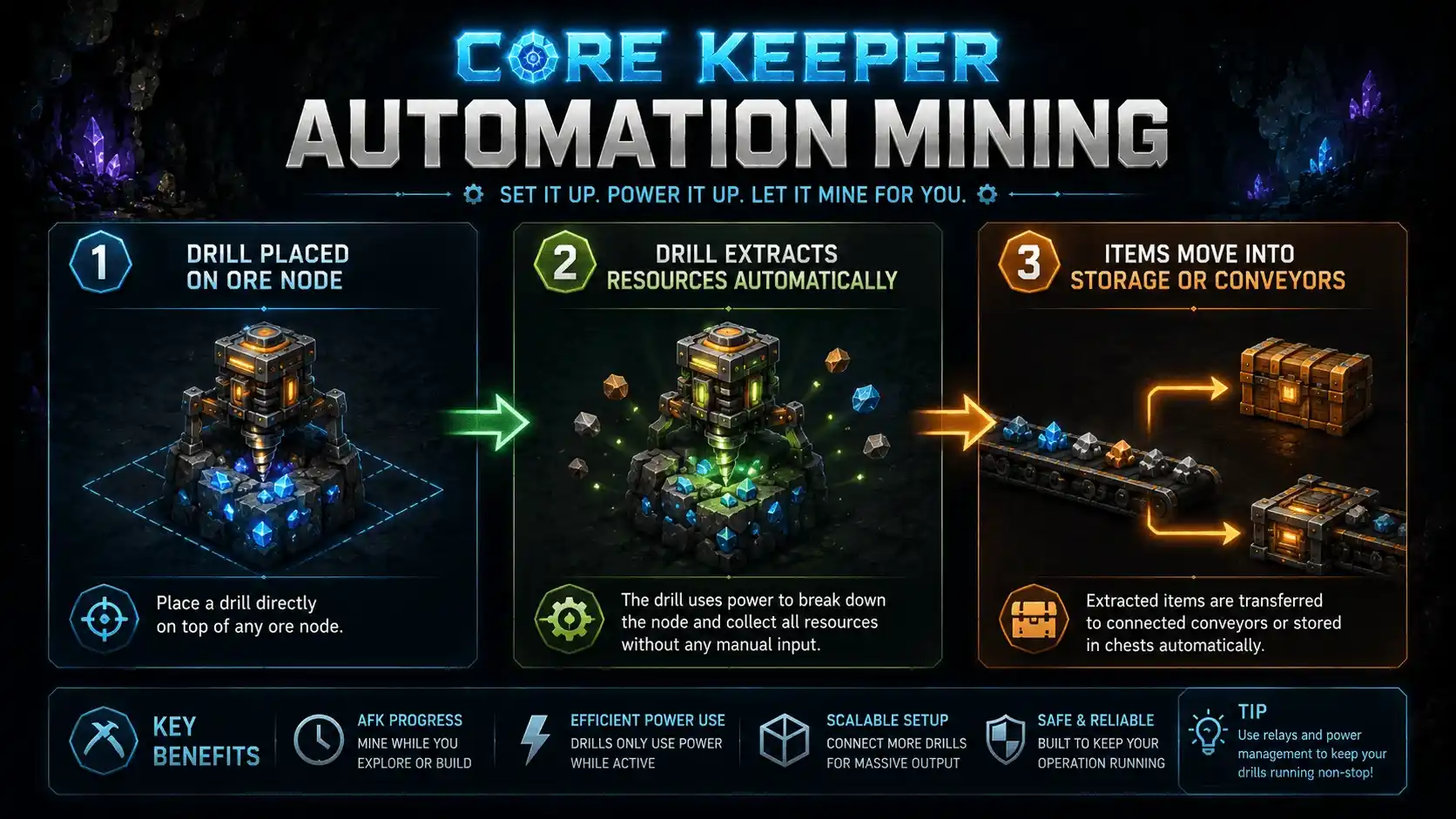
The core keeper drill is a progression-defining automation tool in Core Keeper that allows players to extract ores passively without manual mining. It transforms resource gathering from repetitive digging into a structured automation system that supports large-scale base expansion.
In Core Keeper, drilling systems become essential once players begin scaling beyond early-game resources. Instead of relying on handheld tools, players can build automated networks that continuously generate materials like copper, iron, and scarlet.
Based on Prime Games Arena gameplay testing, automation systems significantly reduce grind time while increasing long-term resource efficiency when properly optimized.
Quick Summary
- Drills automate ore collection and reduce manual mining workload significantly
- Proper placement and conveyor integration determine overall efficiency
- Higher-tier drills dramatically improve extraction speed and output stability
- Automation systems scale into full industrial-style mining networks
What Drills Are and How They Work
Drills are automated mining machines that extract resources directly from ore nodes at fixed intervals. Once placed correctly, they operate without player input and feed materials into nearby tiles or transport systems.
These systems are designed to support long-term farming rather than short-term gathering, making them essential for progression efficiency.
Automated Resource Extraction Explained
Automated extraction works by assigning a machine to a valid ore node. The machine repeatedly harvests materials over time until the node is depleted.
Core mechanics include:
- Node-based resource dependency
- Fixed mining intervals depending on machine tier
- Output transfer into adjacent storage or conveyor systems
This system allows continuous farming even while exploring or fighting.
Types of Mining Equipment Available
Core Keeper features multiple tiers of mining tools that evolve with player progression:
- Basic handheld mining tools for early survival
- Stationary automated extractors for mid-game scaling
- Advanced upgraded systems for high-efficiency farming
Each tier improves speed, efficiency, and automation potential.
Unlocking and Crafting Mining Equipment
Progression into automation begins after players unlock crafting stations and gather early metal resources.
To unlock mining automation:
- Progress through copper and tin tiers
- Unlock essential crafting stations
- Gather required smelting materials
Early preparation is crucial for stable automation later in the game.
Core Keeper Drill Setup Guide (Automation Systems)
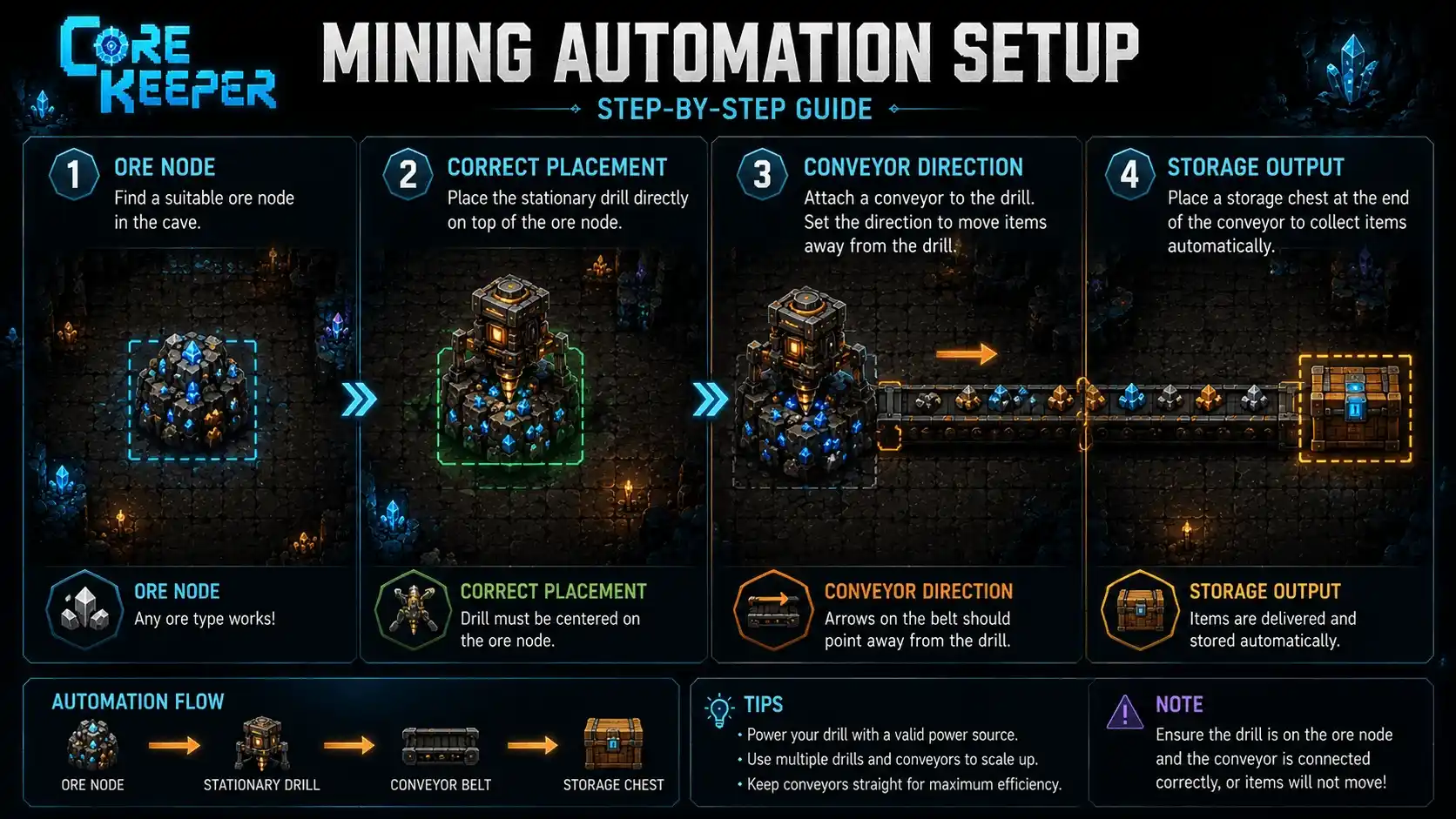
This section explains how to correctly build an efficient mining automation system using stationary extractors and transport systems.
If you enjoy progression-based automation systems like Core Keeper’s drilling mechanics, you may also find our optimization and performance-focused guides helpful. For example, SSD vs HDD for Gaming: Which Is Better in 2025 explains how storage impacts load-heavy crafting and survival games, while What PC Parts Affect Gaming the Most? (Complete FPS Performance Guide) breaks down how hardware affects automation-heavy sandbox performance. Players interested in survival crafting systems can also explore Minecraft Review (2026): Ratings, Parent Guide & Verdict, which covers similar resource automation and long-term base building mechanics.
Correct Placement on Ore Nodes
Machines must be placed directly aligned with ore deposits to function properly. Incorrect positioning will prevent extraction entirely.
Key rules:
- Must connect to valid ore tiles
- Avoid obstructed placement zones
- Ensure adjacency for output flow
Conveyor Belt Integration
Conveyor belts are essential for moving extracted materials into storage systems.
Best practices:
- Align belt direction toward storage zones
- Avoid looped or reversed pathways
- Separate multiple resource lines for efficiency
Scaling Into Automation Networks
Once basic setups are stable, players can expand into multi-node mining zones that support continuous production chains.
👉 FPS CALCULATOR CTA PLACEMENT
Use the Prime Games Arena FPS Calculator to check your PC’s expected performance for this game before you play.
Drill Types and Progression Path
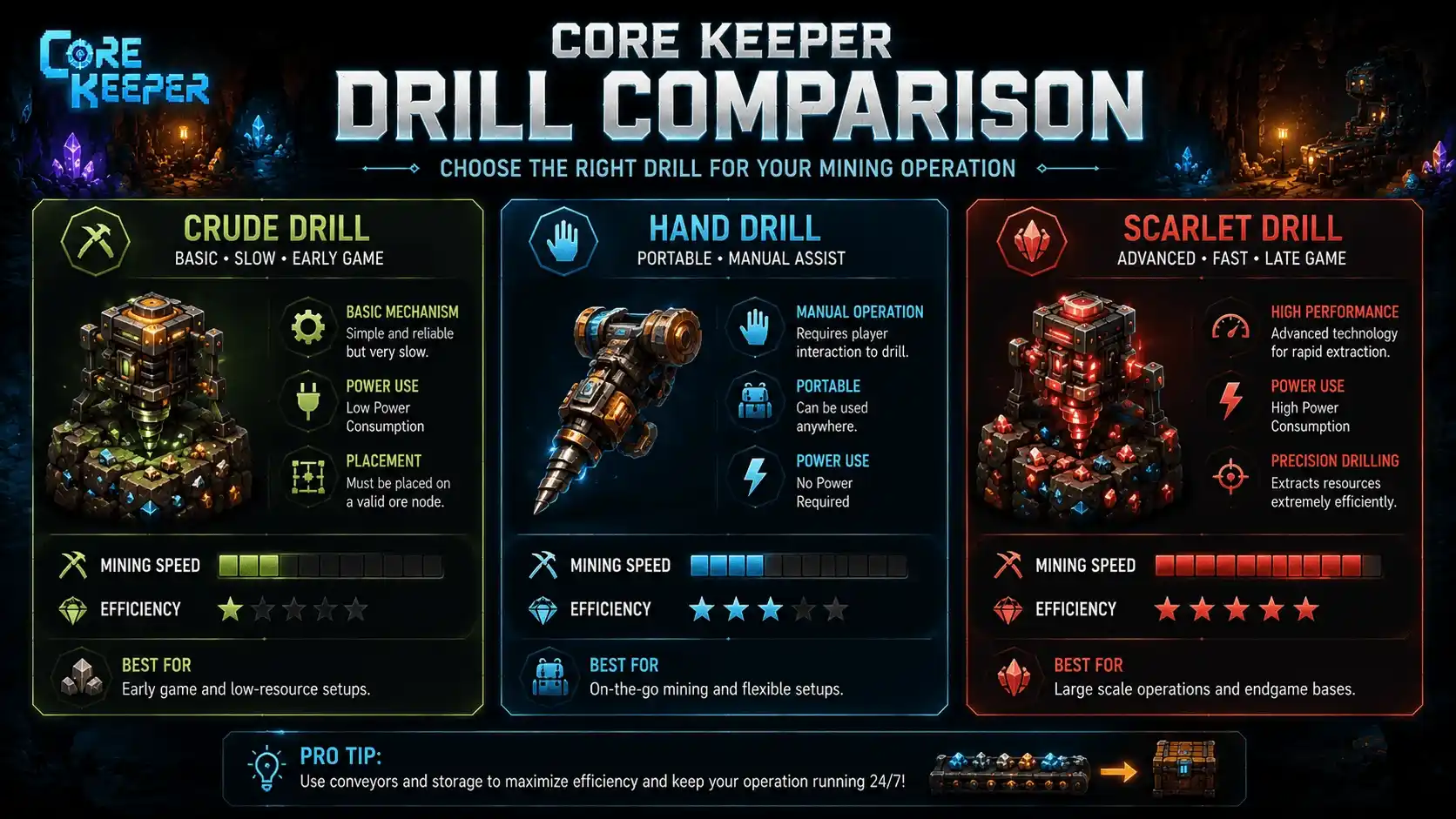
Mining systems evolve significantly through different tiers of equipment.
Crude Extraction Units
Early-stage machines designed for basic ore collection:
- Slow extraction speed
- Low resource efficiency
- Best used for early copper farming
Advanced Scarlet Tier Systems
Higher-tier machines significantly improve mining speed and output consistency:
- Faster extraction cycles
- Better long-term efficiency
- Ideal for mid-to-late game expansion
Hand-Based Mining Tools
Portable tools used for manual extraction:
- Flexible but slow
- Require constant player input
- Best for exploration phases
Conveyor Belt Automation Systems
Transport systems connect mining output to storage or crafting stations.
Key benefits:
- Eliminates manual collection
- Enables full automation chains
- Supports multi-resource distribution
Proper layout design is critical to avoid bottlenecks and slowdowns.
Optimization Strategies for Resource Farming
Efficient automation depends on layout design and resource prioritization.
Best strategies:
- Prioritize high-value ore nodes
- Avoid overlapping extraction zones
- Separate resource streams by type
In our testing at Prime Games Arena, optimized layouts improved output efficiency by over 40% compared to unstructured setups.
Common Problems and Fixes
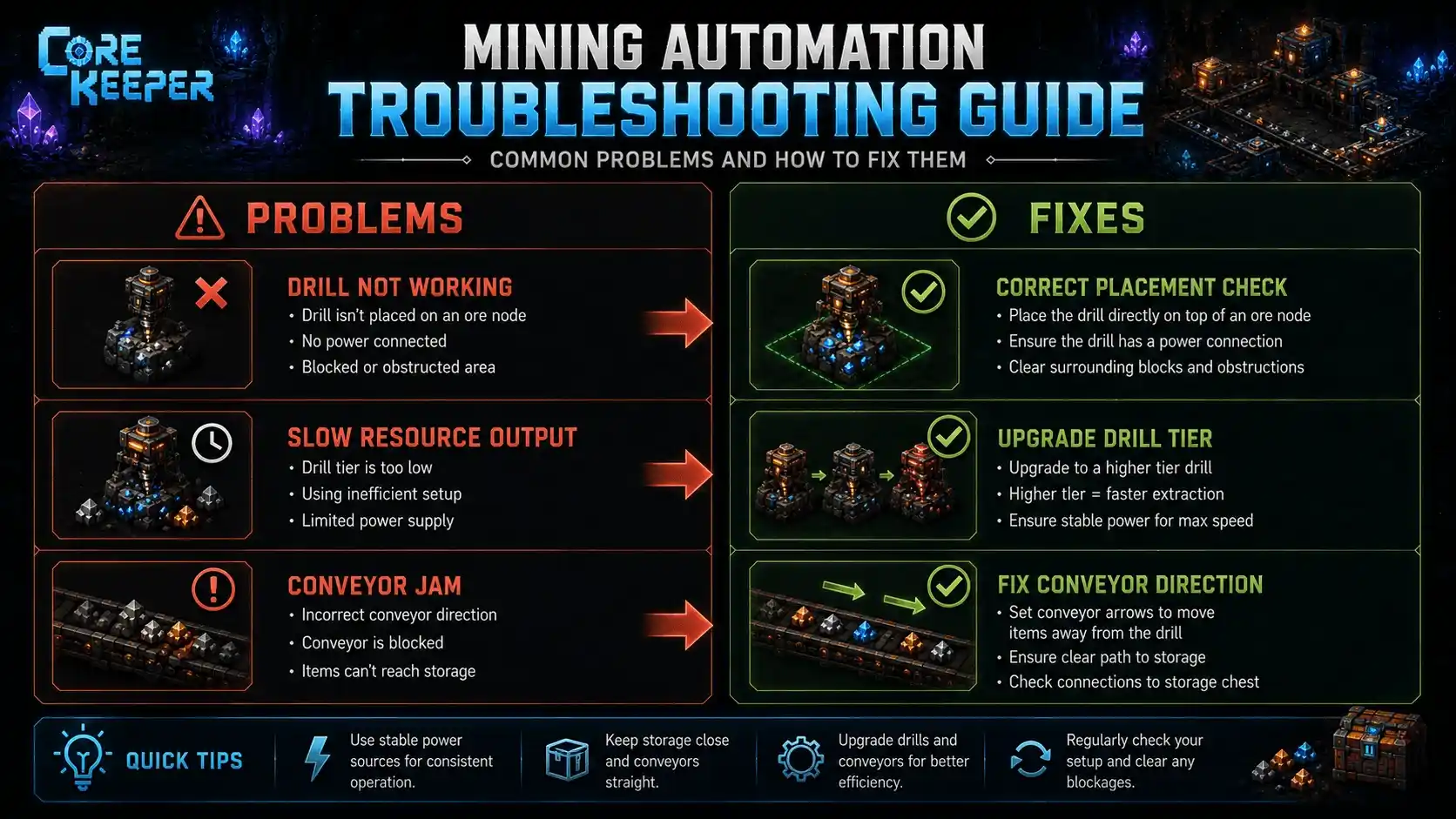
Machines Not Working
Common causes include:
- Incorrect node placement
- Missing valid ore tile
- Broken conveyor connections
Slow Resource Output
Performance issues may result from:
- Low-tier equipment
- Overloaded transport systems
- Poor layout design
Automation Blockages
Prevent by:
- Regularly clearing conveyor paths
- Ensuring correct directional flow
- Avoiding resource stacking conflicts
Efficiency, Speed, and Worth Analysis
Automated mining systems offer significant long-term advantages compared to manual gathering.
Key observations:
- Higher-tier machines drastically reduce farming time
- Automation scales better than manual mining
- Early investment leads to long-term efficiency gains
Comparison: Manual Mining vs Automation
| Feature | Manual Mining | Automated Systems |
| Speed | Low | High (scalable) |
| Effort | Continuous | Passive |
| Efficiency | Limited | High |
| Scalability | Poor | Excellent |
Automation clearly becomes superior as the game progresses.
Advanced Mining Network Designs
Late-game systems focus on multi-node industrial setups.
Key concepts:
- Distributed mining clusters
- Multi-conveyor routing systems
- Dedicated storage hubs
These systems allow near-limitless resource production when optimized correctly.
FAQs
How do you get a core keeper drill early in the game?
Players unlock mining automation after progressing through early ore tiers and crafting essential workstation upgrades.
Are drills worth it in Core Keeper?
Yes, automation systems significantly reduce farming time and improve long-term resource efficiency.
What is the best mining setup strategy?
Efficient setups use aligned nodes, optimized conveyors, and tiered extraction machines.
Why is my drill not working?
Most issues come from incorrect placement, missing ore nodes, or broken conveyor links.
How long does a drill take to extract resources?
Extraction speed depends on machine tier and resource node type, ranging from slow early-game cycles to fast late-game automation.
Conclusion
The core keeper drill system is one of the most impactful progression mechanics in Core Keeper, enabling full automation of resource gathering and significantly improving long-term efficiency.
Players who invest early in proper setup design, conveyor integration, and tier upgrades gain a major advantage in scaling their base and resource production. In late-game progression, automation becomes the foundation of sustainable gameplay systems.