Introduction
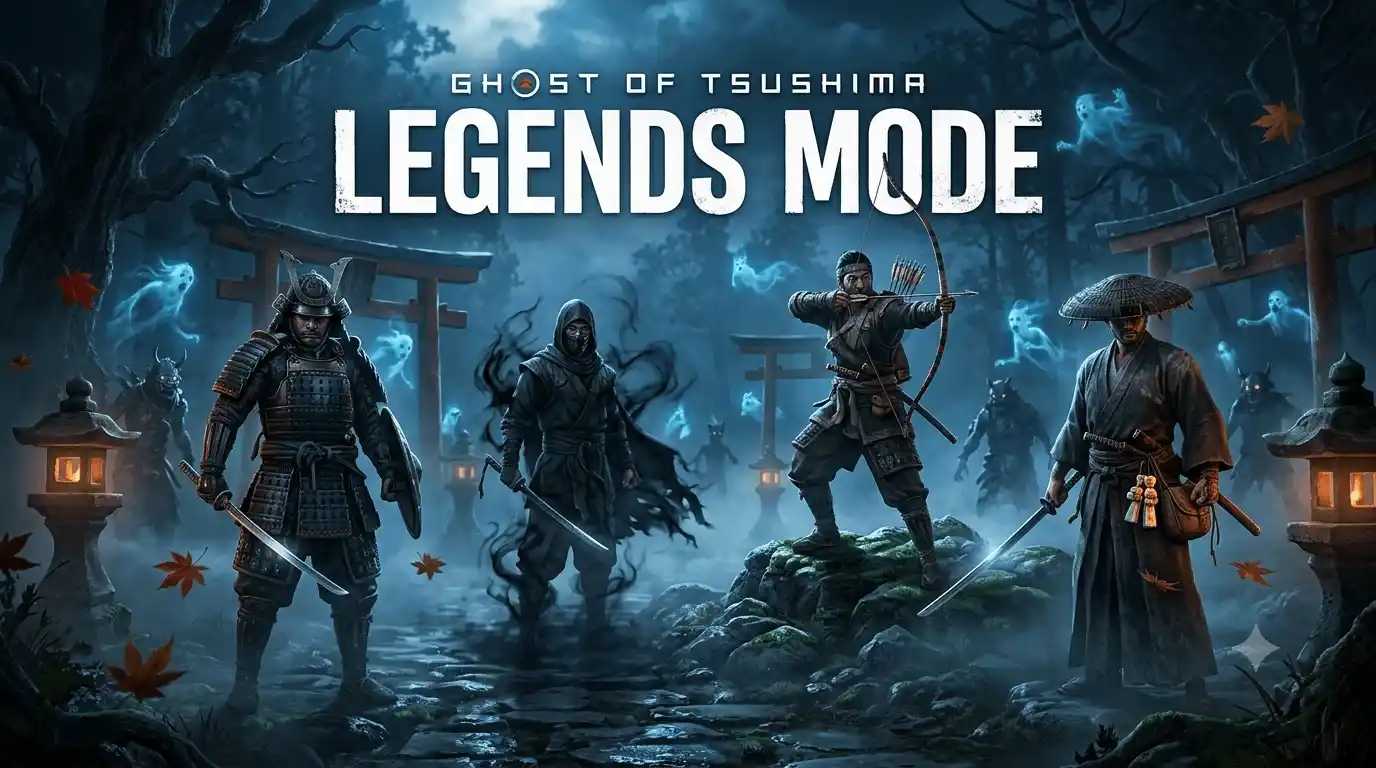
Ghost of Tsushima Legends Mode is the multiplayer expansion for Sucker Punch Productions’ acclaimed samurai action game. Unlike the main campaign, which follows Jin Sakai through a historical invasion of Tsushima Island, this separate experience focuses on cooperative gameplay inspired by Japanese folklore, supernatural enemies, and class-based progression systems.
Many players wonder what is legends mode in ghost of tsushima, whether it supports solo play, and if it remains worth playing years after launch. This guide explains how the multiplayer component works, the available classes, rewards, crossplay support, and what new players should know before jumping in.
By Prime Games Arena | Gaming Expert & PC Performance Specialist
Quick Summary
- Ghost of Tsushima: Legends is a cooperative multiplayer mode built around Japanese mythology and supernatural combat.
- Players can choose between four classes, each with unique abilities and team roles.
- Most content supports matchmaking, while some activities can be completed solo.
- Crossplay support and the PC release have expanded the multiplayer player base significantly.
What Is Ghost of Tsushima: Legends?
Ghost of Tsushima: Legends is a standalone multiplayer experience included with modern versions of the game. Rather than continuing Jin Sakai’s story, it introduces cooperative missions inspired by myths, legends, and supernatural tales from Japanese folklore.
The mode was originally released as a free post-launch update and quickly became one of the most praised multiplayer additions in a single-player focused title. It offers progression systems, loot collection, character classes, and challenging endgame content that differs substantially from the campaign.
Players frequently search for what is ghost of tsushima legends because the experience feels almost like a separate game. While it shares combat mechanics with the main adventure, the structure, enemies, and progression systems are designed specifically for multiplayer play.
How It Differs From the Main Story
The campaign centers on Jin Sakai’s journey during the Mongol invasion, while Legends focuses on mythical warriors battling supernatural threats.
Players unfamiliar with Jin Sakai’s original adventure should also read our Ghost of Tsushima Review & Rating (PS4, PS5, PC) to understand how the campaign compares to the multiplayer experience.
Key differences include:
- Four playable character classes
- Cooperative mission design
- Gear-based progression
- Mythological enemies
- Repeatable activities
- Endgame raids
The core sword combat remains familiar, but the objectives, character abilities, and enemy encounters create a very different gameplay loop.
Based on our gameplay experience, the multiplayer component feels faster paced and more ability-driven than the campaign. Team coordination becomes significantly more important at higher difficulty levels.
The Role of the Storyteller
The Storyteller serves as the gateway to multiplayer activities.
Players access missions through a character known as the Storyteller, who narrates legendary tales of warriors fighting supernatural forces. This narrative device explains why the multiplayer content includes demons, spirits, and other mythological enemies that do not appear in the historical campaign.
Many players searching for ghost of tsushima legends storyteller are simply looking for the NPC who grants access to multiplayer content. In practice, the Storyteller functions as the mode’s mission provider and narrative guide.
How Legends Mode Works
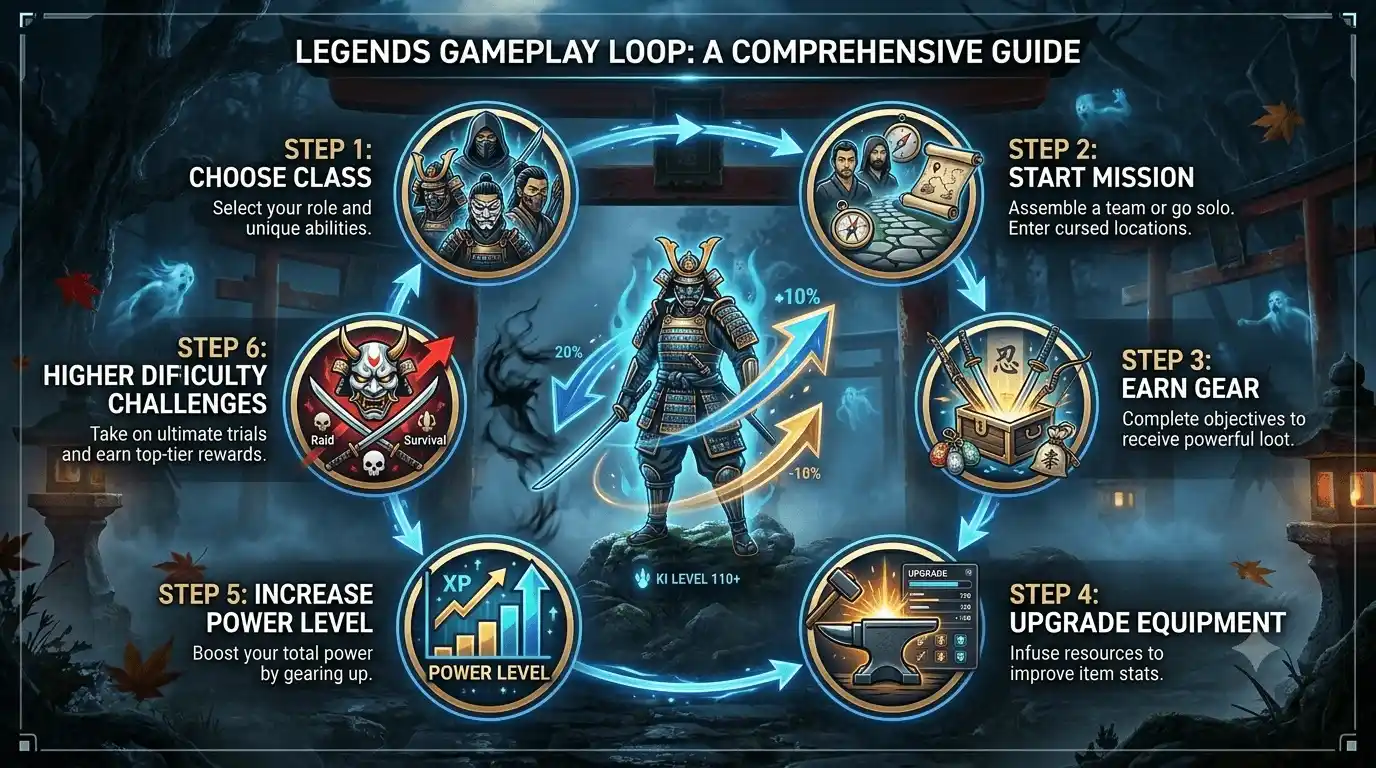
The multiplayer experience revolves around completing missions, earning gear, improving character power, and tackling increasingly difficult content.
The gameplay loop generally follows these steps:
- Select a class
- Enter a mission or survival activity
- Earn gear and resources
- Upgrade equipment
- Increase power level
- Attempt higher difficulties
This progression structure creates strong long-term replay value while maintaining the satisfying combat system that made the original release popular.
Story Missions
Story missions are cooperative adventures designed for two players.
These missions feature:
- Narrative-driven objectives
- Unique enemy encounters
- Environmental challenges
- Cooperative mechanics
- Multiple difficulty settings
Most missions take between 15 and 30 minutes depending on team coordination and difficulty selection.
For beginners, story missions provide the best introduction to the multiplayer systems because they teach mechanics gradually while offering consistent rewards.
Survival Challenges
Survival mode is one of the most popular activities.
Teams must defend multiple zones against waves of enemies while managing resources and maintaining map control. Enemy numbers and difficulty increase over time, requiring effective teamwork and class synergy.
Success depends on:
- Positioning
- Crowd control
- Communication
- Resource management
- Objective defense
In our testing, survival mode delivers some of the most rewarding cooperative moments because every class contributes differently to team success.
Raid Activities
Raids represent the highest level of challenge available.
These activities introduce:
- Complex puzzles
- Team coordination requirements
- High-level enemies
- Unique mechanics
- Exclusive rewards
Unlike standard missions, raids require strong communication and a deeper understanding of class abilities.
For many experienced players, raids serve as the ultimate endgame objective.
Classes and Character Roles Explained
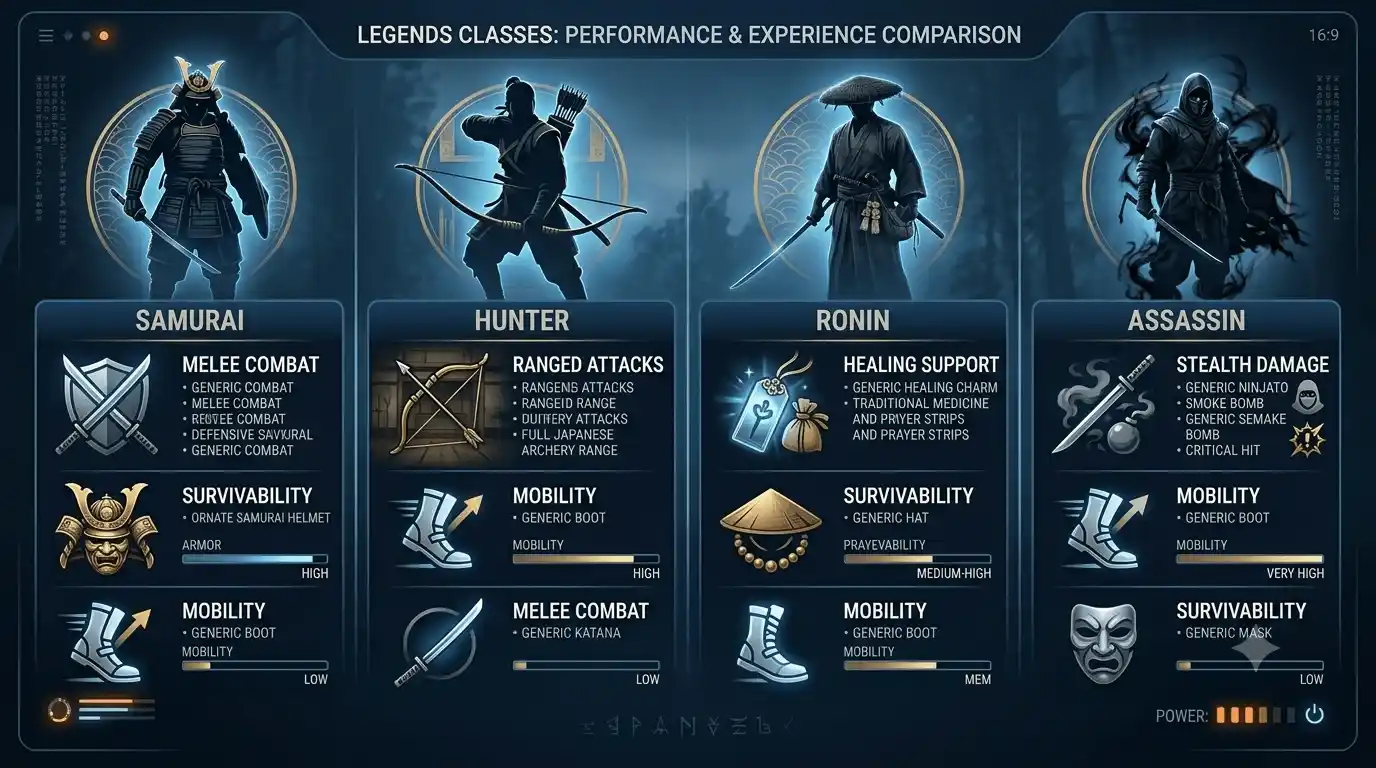
Character classes define how players contribute to a team.
Each role offers unique strengths, making class selection one of the most important decisions for both beginners and veterans.
Samurai
The Samurai is the frontline fighter.
Strengths include:
- High survivability
- Strong melee combat
- Self-healing capabilities
- Reliable damage output
New players often gravitate toward this class because it closely resembles the combat style used in the campaign.
Hunter
The Hunter specializes in ranged combat.
Key advantages include:
- Long-range damage
- Crowd control
- Safe positioning
- High burst potential
Experienced players can clear large groups of enemies efficiently with proper bow usage and ability management.
Ronin
The Ronin serves as the primary support role.
Core abilities include:
- Team healing
- Reviving allies
- Utility-focused skills
- Group survivability boosts
Prime Games Arena recommends Ronin for players who enjoy supporting teammates and increasing overall group success.
Assassin
The Assassin focuses on stealth and burst damage.
Advantages include:
- Fast eliminations
- Stealth attacks
- High mobility
- Strong ultimate abilities
This class rewards precision and positioning more than raw durability.
Players who enjoyed stealth gameplay during the campaign often prefer Assassin because of its familiar tactical approach.
Which Class Is Best for Beginners?
There is no universally best class, but some options are easier to learn.
For most newcomers:
- Samurai
- Ronin
- Hunter
- Assassin
Samurai provides the most forgiving experience thanks to its survivability and straightforward combat style.
Ronin is also beginner-friendly because support abilities remain valuable even while players learn advanced mechanics.
When discussing ghost of tsushima legends best class, the answer largely depends on playstyle rather than raw power. Every class remains viable throughout the entire progression system.
Can You Play Alone?
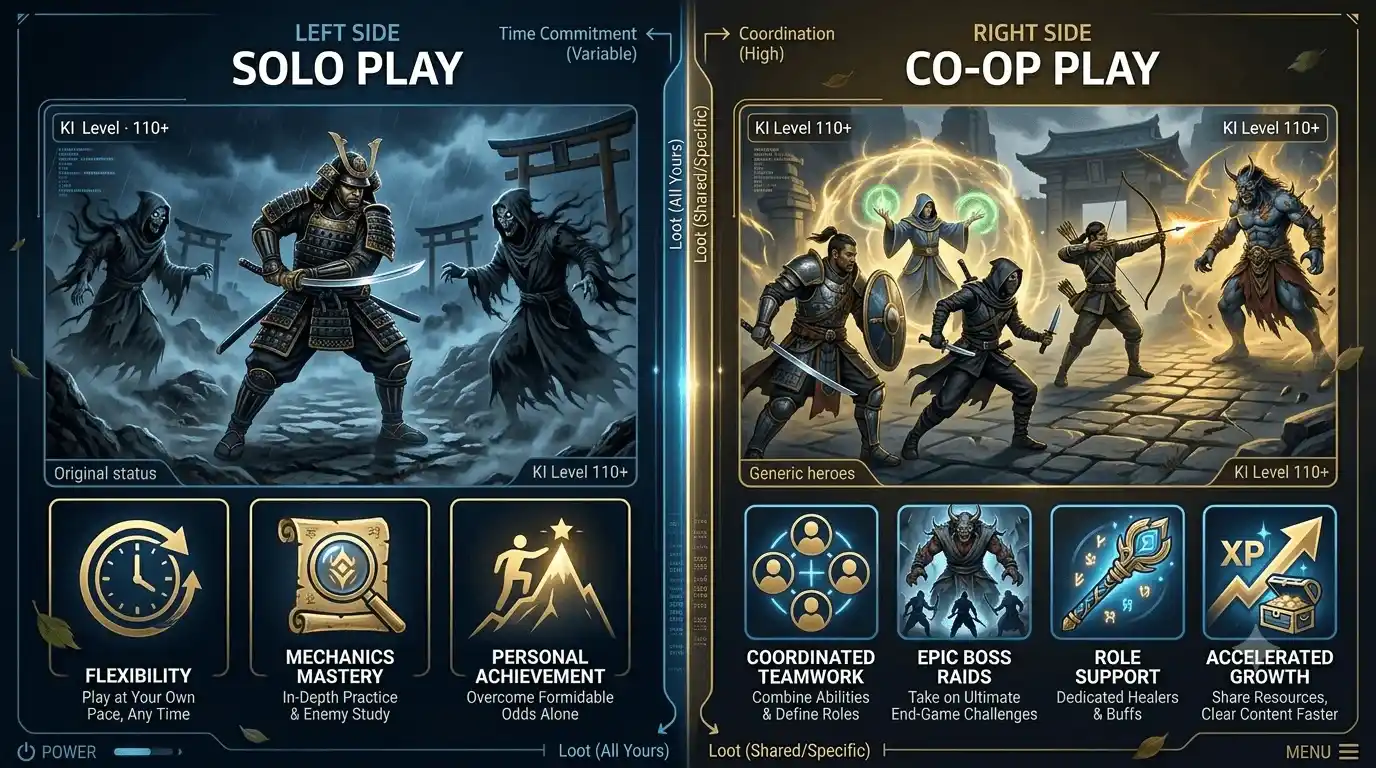
Yes, many activities can be completed solo, although the experience was primarily designed around cooperative gameplay.
Players often search for ghost of tsushima legends mode solo because they want to know whether matchmaking is mandatory. The answer depends on the content being attempted.
Solo-Friendly Activities
Several activities work reasonably well for solo players:
- Lower-difficulty story missions
- Early progression content
- Gear farming activities
- Practice runs
Solo play also allows players to learn class mechanics without relying on teammates.
Based on our gameplay experience, Samurai and Assassin tend to perform best during solo content because of their strong self-sufficiency.
Content Designed for Groups
Certain activities become significantly harder without teammates.
These include:
- High-level survival challenges
- Nightmare difficulty content
- Raid activities
- Coordination-heavy encounters
Many objectives are balanced around multiple players contributing simultaneously.
Pros and Cons of Solo Play
Advantages
- No matchmaking wait times
- Learn mechanics at your own pace
- Complete control over strategy
- Flexible play sessions
Disadvantages
- Slower progression
- Greater difficulty
- Limited access to some content
- Reduced class synergy opportunities
For most players, a mixture of solo and cooperative play provides the best overall experience.
Multiplayer Features and Crossplay Support
One of the biggest reasons the multiplayer component remains active is its support for cooperative play across multiple platforms.
Players frequently ask whether the game supports crossplay and how matchmaking works. The good news is that modern versions allow a larger player pool than the original PlayStation-only release.
Supported Platforms
The multiplayer experience is currently available on:
- PlayStation 4
- PlayStation 5
- PC
- Steam
- Epic Games Store
The PC release introduced the mode to a new audience and helped keep matchmaking healthy across regions.
How Crossplay Works
Crossplay allows players on different platforms to join the same sessions.
Supported features include:
- Cooperative matchmaking
- Friend invitations
- Shared multiplayer lobbies
- Cross-platform progression compatibility where supported
Many players searching for is ghost of tsushima legends crossplay or ghost of tsushima multiplayer crossplay are specifically looking for confirmation that PC and PlayStation users can play together.
As of the latest release versions, crossplay support has become one of the strongest features of the multiplayer ecosystem.
Two-Player and Four-Player Modes
Different activities support different team sizes.
| Activity | Recommended Players |
| Story Missions | 2 |
| Survival | 4 |
| Raid Chapters | 4 |
| Practice Activities | 1–2 |
For players wondering how to play 2 player ghost of tsushima, story missions are the easiest place to begin.
These missions are specifically designed around two-player cooperation and provide an excellent introduction to teamwork mechanics.
Rewards, Progression, and Loot Systems
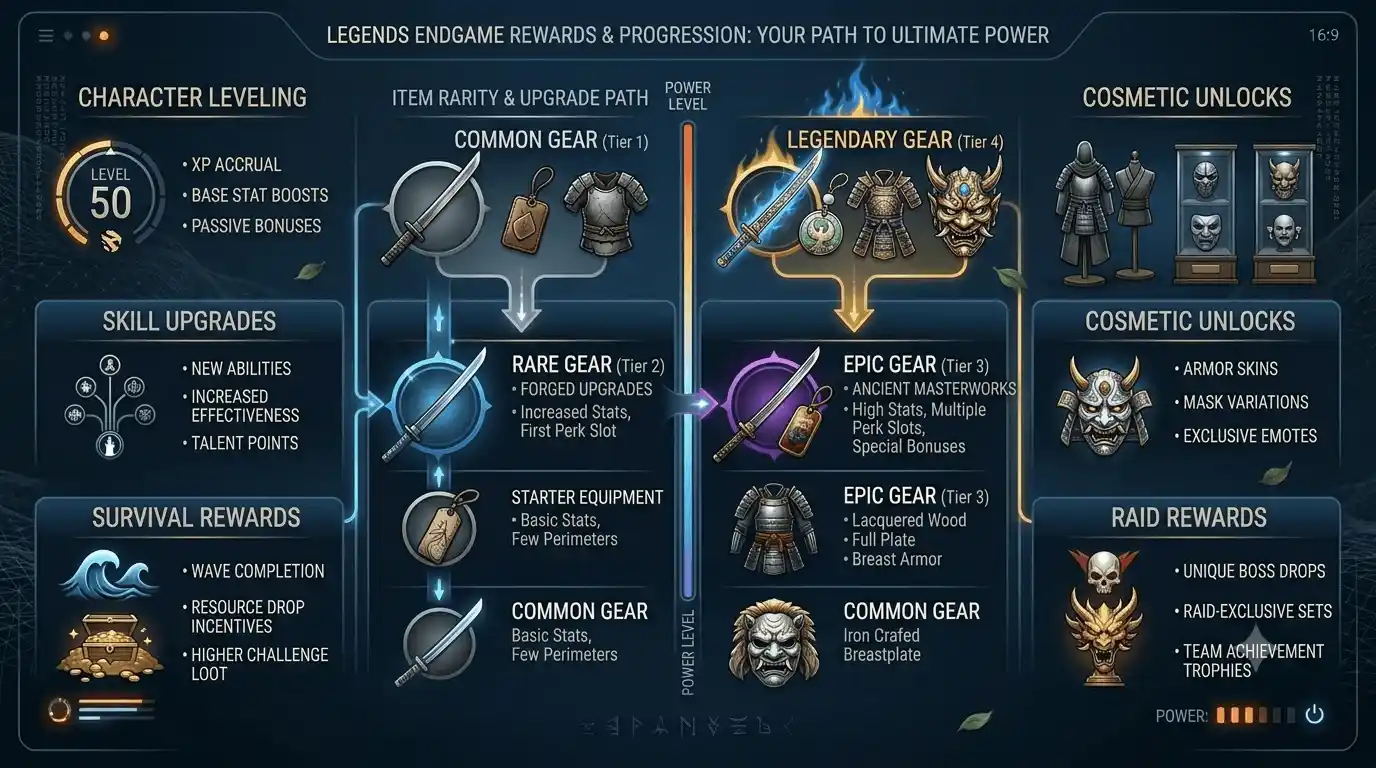
Progression is one of the biggest reasons players continue returning long after finishing the campaign.
Every activity provides opportunities to improve gear, unlock cosmetics, and strengthen character builds.
Equipment Tiers
Gear comes in multiple rarity levels.
Typical progression includes:
- Common
- Uncommon
- Rare
- Epic
- Legendary
Higher-tier equipment often includes stronger perks and build-defining bonuses.
Players gradually increase their overall power level by equipping better gear and upgrading existing items.
Character Growth and Builds
Each class supports multiple playstyles.
Customization options include:
- Weapon selection
- Charm effects
- Class abilities
- Ultimate skills
- Utility tools
In our testing, experimenting with different builds dramatically changes gameplay. A support-focused Ronin feels completely different from an aggressive damage-oriented version of the same class.
Endgame Incentives
Long-term progression includes:
- Nightmare difficulty challenges
- Weekly objectives
- Legendary gear hunting
- Cosmetic rewards
- Class mastery
Many players searching for ghost of tsushima legends mode rewards want to know whether the grind remains worthwhile. For fans of cooperative progression systems, the endgame offers a substantial amount of replayability.
Platform Availability and Online Requirements
The multiplayer component is now more accessible than ever thanks to its PC release.
However, players should understand the online requirements before downloading or purchasing the game.
PC and Steam Support
Players searching for ghost of tsushima legends mode pc or ghost of tsushima legends mode steam are generally looking for platform compatibility information.
The multiplayer experience is fully available through the PC version and includes the same major content found on PlayStation.
Key PC benefits include:
- Higher frame rate support
- Ultrawide compatibility
- Improved graphics options
- Keyboard and mouse support
- Crossplay functionality
FPS Calculator CTA:
Want to know how your hardware will perform? Use our FPS calculator and hardware guides to estimate expected frame rates before installing the game.
Can You Play Offline?
The multiplayer component requires an internet connection.
While the main campaign offers extensive offline gameplay, cooperative activities depend on online services and matchmaking systems.
Players searching for ghost of tsushima legends offline often discover that offline access is limited because the mode was built around connected play.
Account and Connectivity Requirements
Requirements may include:
- Internet connection
- Platform account access
- Multiplayer permissions
- Updated game version
A stable connection becomes especially important during Survival and Raid activities where interruptions can affect the entire team.
Common Beginner Mistakes to Avoid
New players often make progression mistakes that slow down advancement and make higher difficulties more frustrating.
Avoiding these issues can significantly improve the early experience.
Ignoring Class Synergy
Many beginners focus only on personal damage output.
However, team composition often matters more than individual performance.
Strong groups typically combine:
- Frontline durability
- Support healing
- Ranged pressure
- Objective control
Balanced teams consistently outperform groups built around a single role.
Upgrading the Wrong Gear Too Early
Resources can be limited during early progression.
Many players invest heavily in equipment that becomes obsolete a few missions later.
Prime Games Arena recommends saving major upgrades until stronger gear begins dropping consistently.
This approach improves long-term efficiency and reduces wasted resources.
Skipping Cooperative Objectives
Some objectives provide valuable bonuses that inexperienced players overlook.
Examples include:
- Bonus challenges
- Defensive objectives
- Team-based tasks
- Resource opportunities
Completing these objectives often leads to faster progression and better rewards.
Is It Worth Playing Today?
Yes. The multiplayer experience remains one of the most impressive cooperative modes added to a modern action game.
Even years after launch, the combination of strong combat, class variety, and replayable activities continues to attract players.
Best Reasons to Try It
Major strengths include:
- Excellent sword combat
- Distinct character classes
- Strong cooperative design
- Meaningful progression
- Replayable endgame content
- Crossplay support
Based on our gameplay experience, the combat remains among the strongest melee systems available in any multiplayer action title.
The responsiveness and fluidity of encounters continue to hold up remarkably well.
Potential Drawbacks
No multiplayer experience is perfect.
Potential concerns include:
- Raid coordination requirements
- Repetitive grinding for specific gear
- Smaller content pool compared to live-service games
- Dependence on teamwork at higher difficulties
Most of these drawbacks become less significant when playing with friends or a consistent group.
Legends Compared With Other Multiplayer Experiences
The cooperative component occupies a unique position within the gaming landscape.
While multiplayer design differs greatly, players who enjoy cooperative teamwork and strategic objectives may also find useful tips in our Fortnite Map Guide: Best Locations and Drop Spots (2026).
Rather than focusing on loot explosions or live-service mechanics, it emphasizes teamwork and skillful combat.
Co-op Structure Comparison
| Feature | Legends | Traditional Co-op RPGs | Extraction Shooters |
| Story Focus | High | Medium | Low |
| Character Classes | Yes | Yes | Limited |
| Raid Content | Yes | Yes | Rare |
| Matchmaking | Strong | Strong | Moderate |
| Gear Progression | Moderate | High | High |
| Team Coordination | High | Medium | High |
This balance makes the multiplayer experience accessible without sacrificing depth.
What Makes It Unique
Similar to the mythological themes explored in God of War Ragnarok PS5 Review (2026): Is It Worth Playing?, Legends blends supernatural storytelling with action-focused gameplay.
Several elements distinguish it from competitors:
- Japanese folklore themes
- Mythological enemy designs
- Precision melee combat
- Strong class identity
- Minimal live-service pressure
Unlike many modern multiplayer games, progression feels rewarding without requiring constant seasonal participation.
Ghost of Yōtei and the Future of Multiplayer
Interest in future multiplayer content has increased as players look toward Ghost of Yōtei.
Although official information remains limited, community discussion frequently centers on whether the next title will receive a similar cooperative component.
What Has Been Confirmed So Far
Official announcements primarily focus on the upcoming single-player experience.
Confirmed details should always come from developer statements rather than speculation.
Players should be cautious when evaluating rumors regarding future multiplayer features.
Community Expectations
Players interested in cooperative tension and teamwork-driven gameplay may also enjoy our A Quiet Place: The Road Ahead Review & Gameplay Guide.
Popular requests include:
- Expanded class systems
- Larger raids
- Additional cooperative missions
- More progression depth
- New mythology-inspired enemies
If a future multiplayer component follows the foundation established here, expectations will be extremely high due to the strong reputation of the existing cooperative experience.
Conclusion
Ghost of Tsushima Legends Mode remains one of the most successful multiplayer additions ever released for a primarily single-player action game. It combines the precise combat of the main adventure with class-based progression, cooperative missions, survival challenges, and endgame raids inspired by Japanese mythology.
Whether you prefer solo play, two-player story missions, or coordinated four-player activities, there is a substantial amount of content to explore. With crossplay support, PC availability, rewarding progression systems, and active matchmaking, the multiplayer experience continues to offer excellent value for both new and returning players.
Frequently Asked Questions
What is Ghost of Tsushima Legends Mode?
It is the multiplayer component of Ghost of Tsushima that focuses on cooperative missions, class-based progression, survival challenges, and raid content inspired by Japanese folklore rather than the historical campaign.
Is Legends mode single player?
Yes, some activities can be completed alone. Story missions on lower difficulties and certain progression activities are solo-friendly, although the mode is primarily designed around cooperative play.
Which class is best for beginners?
Most new players find Samurai the easiest starting class because of its survivability, straightforward abilities, and strong melee combat. Ronin is another beginner-friendly option thanks to its healing and support capabilities.
Does the multiplayer component support cross-platform play?
Yes. Modern versions support crossplay functionality, allowing eligible PlayStation and PC players to participate in multiplayer activities together.
Does the mode have its own story?
Yes. The cooperative experience includes story missions narrated by the Storyteller. These missions explore supernatural legends and mythological threats that are separate from Jin Sakai’s campaign.
Can PC players join PlayStation users?
Yes. Crossplay support allows eligible users on supported platforms to join the same multiplayer sessions, improving matchmaking and player population.
Are rewards shared with the campaign?
Progression systems are largely separate. Characters, gear, abilities, and multiplayer progression exist within the cooperative experience rather than directly affecting campaign progression.