
Finding a trustworthy game review is harder than it should be. Most major outlets are chasing traffic with review scores disconnected from real player experience. What you actually want to know is simple: is this game worth your time? Will you enjoy it, on your platform, with your taste in games?
That is the standard every review at Prime Games Arena is held to. This hub collects every game we have reviewed, organized by genre and series, so you can find honest coverage of titles you are considering — or discover something great you have never heard of.
Action-Adventure & Open World
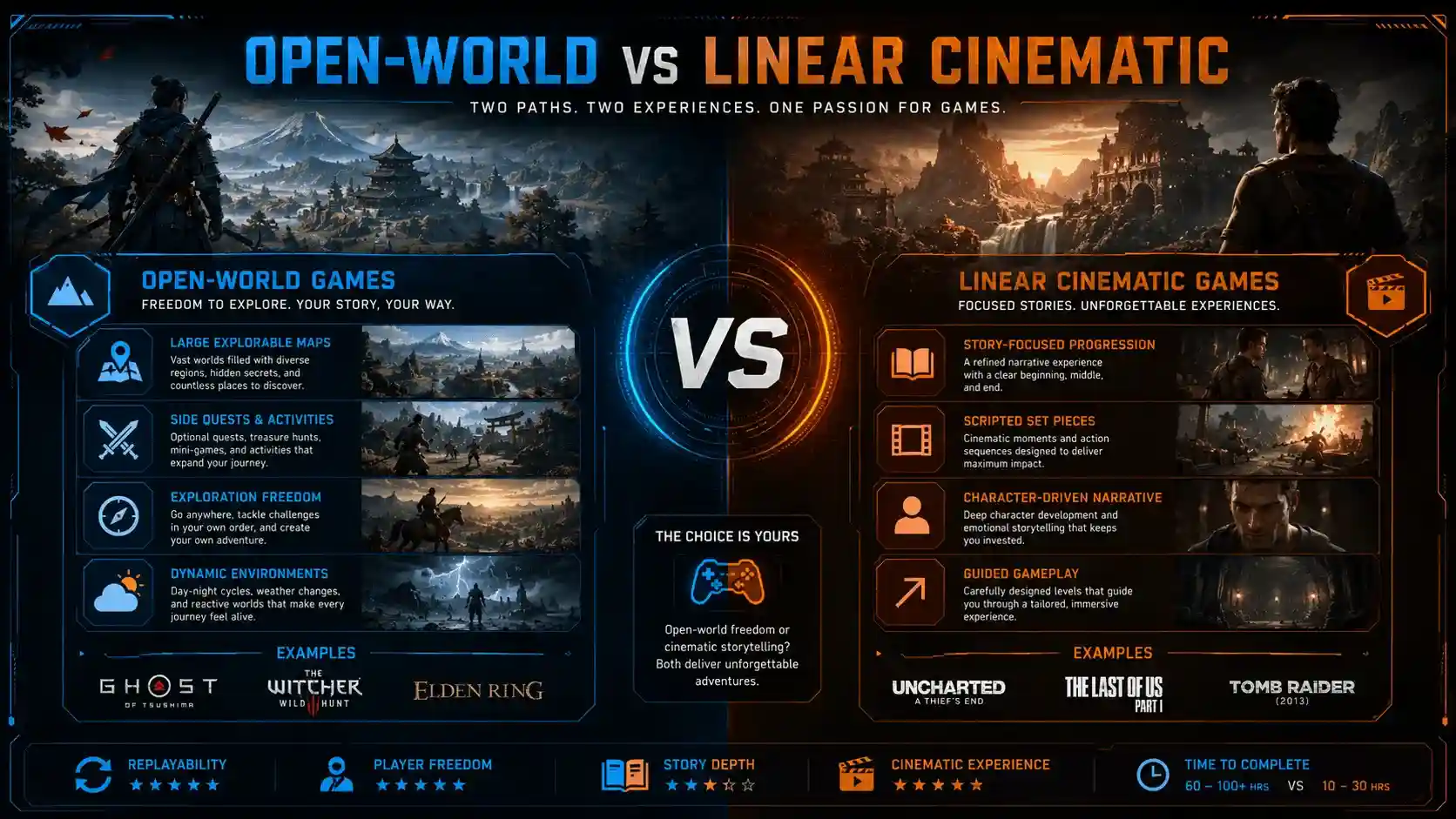
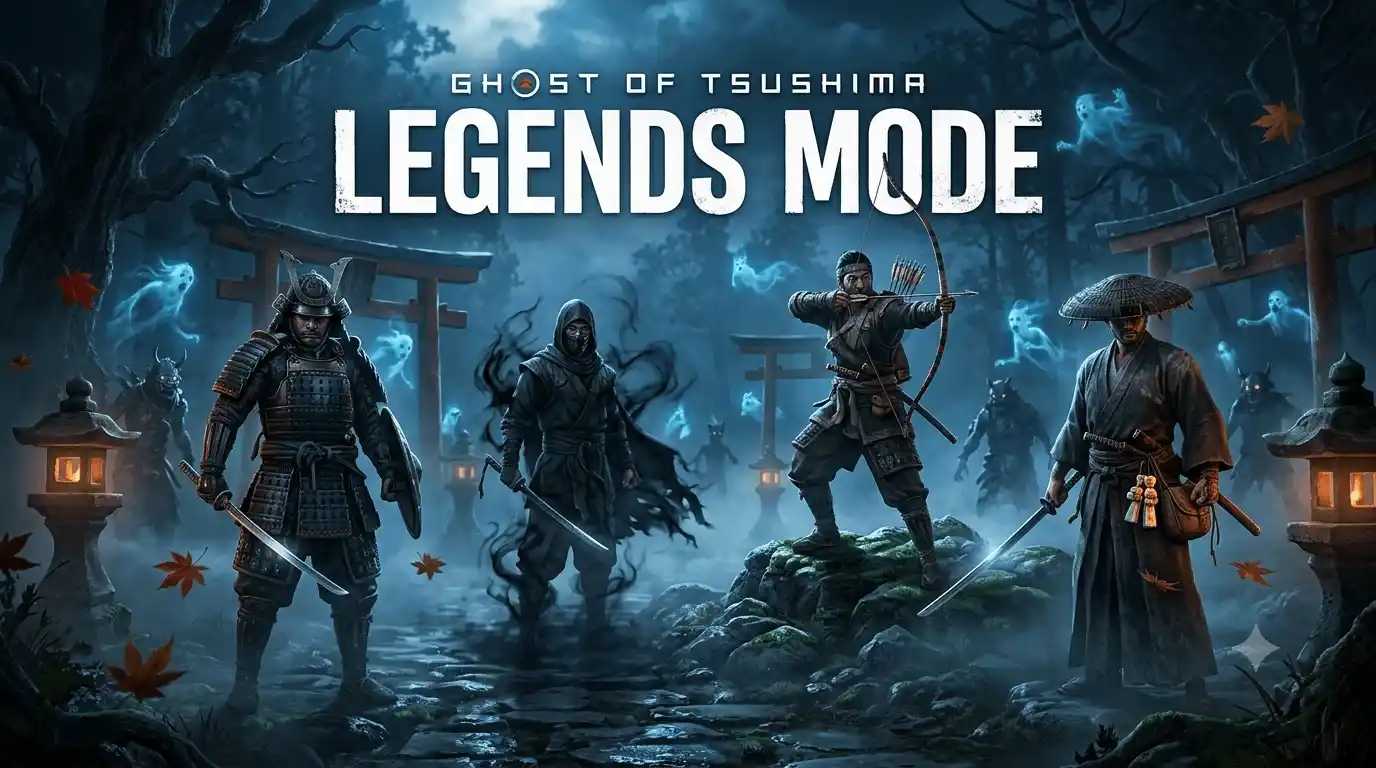
Ghost of Tsushima — Rating & Full Review (PS4, PS5, PC)
Ghost of Tsushima is one of the finest open-world action games of the PlayStation 4 era, and it only improves on PS5 and PC. Sucker Punch built a feudal Japan that feels genuinely alive — wind-swept grasslands, bamboo forests, hot springs, and villages rendered with extraordinary care for atmosphere. The samurai combat system is deliberate, elegant, and punishing in the best possible way.
Our Ghost of Tsushima review covers the full experience across all platforms — including the Director’s Cut, Iki Island, and Legends multiplayer. We give it an honest rating with clear breakdowns of what earns its praise and where it falls short for certain types of players. If you are considering it on PC or replaying on PS5, this review will tell you exactly what to expect.
Verdict summary: A benchmark open-world game with exceptional atmosphere, fluid combat, and one of gaming’s most visually distinctive settings.
Ratchet & Clank (PS4) — Full Review
The 2016 PS4 reimagining of Ratchet & Clank was built as a companion piece to the animated film of the same name, retelling the original game’s story with modern visuals and updated gameplay. It is also one of the most technically impressive PS4 titles ever released — a showcase of what the hardware could do.
Our Ratchet & Clank PS4 review covers the game’s strengths (its arsenal of creative weapons, its gorgeous visual design, its accessibility), as well as its weaknesses (a streamlined story that cuts corners with the source material). We rate it clearly and explain who will enjoy it most.
Ratchet & Clank: Rift Apart — Review & Rating
Rift Apart is a next-generation showcase — a PS5 exclusive built specifically to demonstrate what SSD-powered near-instant loading and DualSense haptic feedback can do for a platformer. It introduces Rivet, an alternate-dimension Lombax who becomes one of the most charming new characters in PlayStation’s recent history.
Our Rift Apart review and rating gives an honest breakdown of how the game performs, how it compares to previous entries in the series, whether the short runtime is justified by its quality, and whether it is worth buying if you have already played the PS4 reboot.
Assassin’s Creed Origins — Review
Origins was the game that rebooted the Assassin’s Creed formula — replacing the series’ linear mission structure with a full open-world RPG, set in Ptolemaic Egypt during one of history’s most visually spectacular periods. It was a risk that largely paid off, revitalizing a franchise that had been running on fumes.
Our Assassin’s Creed Origins review covers the new combat system, the depth of the Egyptian setting, the narrative’s strengths and weaknesses, and how it holds up against both its sequels and other open-world RPGs in 2026.
God of War 3 — Is It Still Good?
God of War 3 was a technical marvel when it released on PS3 — relentlessly brutal, visually overwhelming, and emotionally hollow in exactly the way Greek tragedy demands. Kratos tearing through Olympus with mythological fury was one of that generation’s defining gaming moments.
Our God of War 3 guide asks the question honestly in 2026: does it hold up? We look at the gameplay against modern action game standards, the narrative within the full trilogy, and what type of player will still find it essential viewing.
Marvel’s Avengers — Game Review
Marvel’s Avengers had one of the steeper drops in player goodwill of any major release in recent memory. Strong moment-to-moment combat and an unexpectedly solid single-player campaign could not overcome a live-service structure that drove players away steadily after launch.
Our Avengers game review covers the full picture honestly — the single-player campaign’s genuine merits, the multiplayer structure’s fundamental design problems, and what the experience is like to play in 2026 with its servers situation. If you are curious about the campaign as a standalone experience, this review will tell you if it is worth your time.
Far Cry Primal — Reviews
Far Cry Primal took the series back to the Stone Age — removing guns, vehicles, and modern mechanics in favor of bows, spears, fire, and tamed wildlife companions. It was a bold creative swing that left the playerbase split: some loved the stripped-back brutality; others missed the signature Far Cry sandbox chaos.
Our Far Cry Primal review evaluates how successfully the prehistoric setting translates the series’ strengths, whether the content holds up over a full playthrough, and who this entry is actually made for.
Prey (PS4) — Review
Arkane Studios’ Prey is one of the most criminally underplayed games of the PS4 era. A first-person immersive sim set on a space station overrun by alien organisms, it rewards curiosity, experimentation, and unconventional thinking in ways that few games ever attempt. It is closer in spirit to System Shock 2 than any shooter.
Our Prey PS4 review makes the case for why this game deserves a second look, covers its narrative depth, its design philosophy, and the honest downsides that prevent it from being perfect.
DOOM (PS4) — Review
id Software’s 2016 DOOM revival was a master class in momentum-based combat design. Fast, brutal, mechanically precise, and proudly old-school in its refusal to stop and let you breathe — it reinvented the series for a generation that had grown up with regenerating health and cover shooters.
Our DOOM PS4 review covers the campaign, the multiplayer, the Snapmap level editor, and how the game’s philosophy of movement-as-survival changed expectations for first-person shooters that followed it.
Uncharted Series Reviews
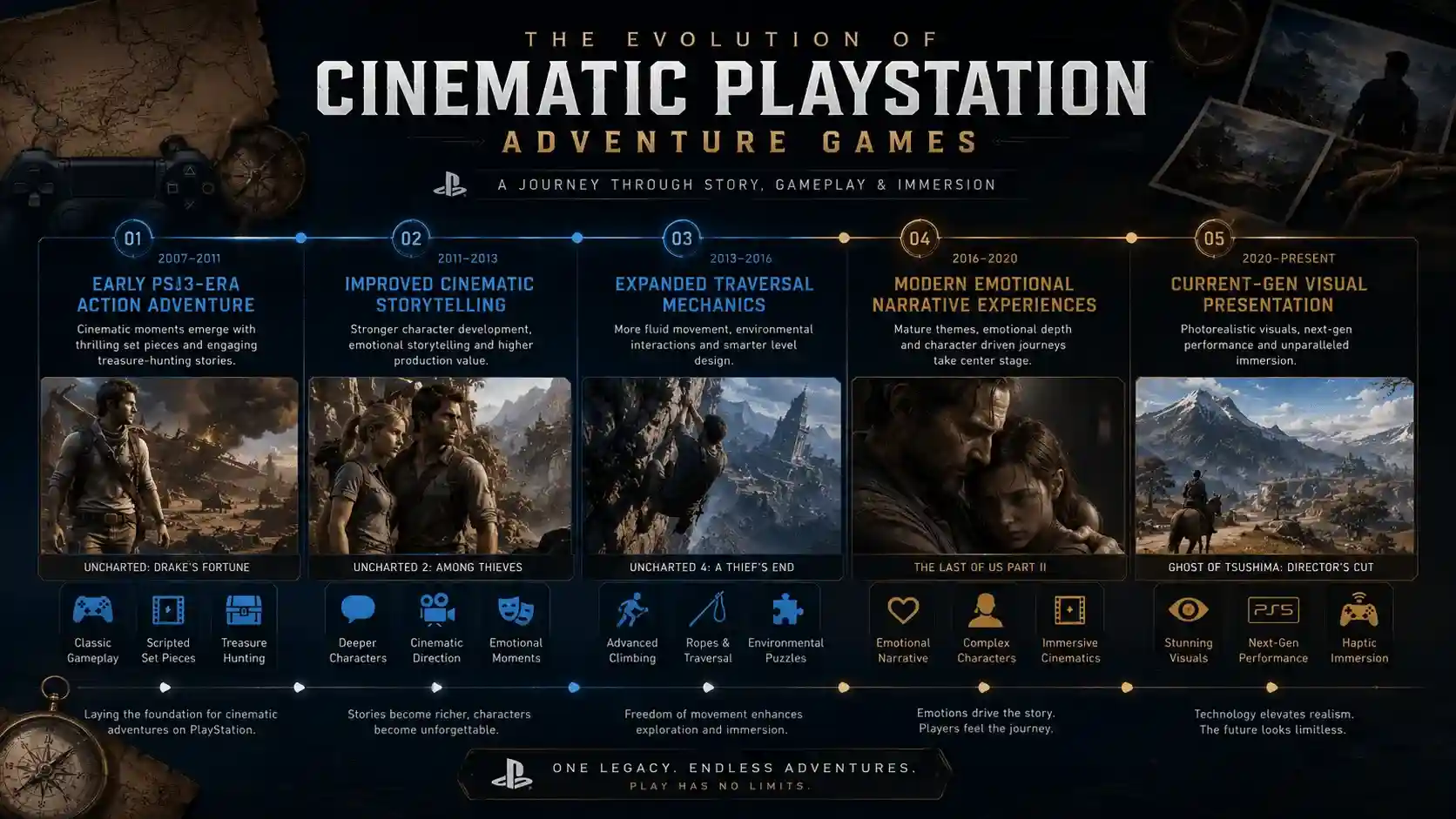
The Uncharted series is one of PlayStation’s great cinematic franchises — globe-trotting treasure hunters, set-piece spectacle, sharp dialogue, and some of the best third-person gunplay of its era. Here is our full coverage of the series.
Uncharted: Drake’s Fortune — Review
The game that launched the series and defined PlayStation 3-era storytelling ambition. Drake’s Fortune established Nathan Drake’s voice, Naughty Dog’s approach to character-driven action, and the template the series would refine over four sequels.
Our Uncharted: Drake’s Fortune review evaluates how the original holds up in 2026 — its historical importance, its gameplay limitations by modern standards, and whether it is worth starting from the beginning or jumping to a later entry.
Uncharted 3: Drake’s Deception Remastered — Review
Uncharted 3 is a game of extraordinary highs and uneven design — the cargo plane sequence and the cruise ship chase are among the best set-pieces in gaming history, but the campaign occasionally loses its momentum in ways the tighter Uncharted 2 never did.
Our Uncharted 3 remastered review covers both the original game’s qualities and what the remaster adds, gives an honest verdict on where it ranks in the series, and assesses how it holds up on PS4.
Uncharted 4: A Thief’s End — Review
Many consider Uncharted 4 the series peak — a more mature, emotionally grounded story that gave Nathan Drake a genuine ending, with expanded gameplay systems that made the traversal and combat feel significantly more flexible than earlier entries.
Our Uncharted 4 review is a full breakdown of what makes it the best entry for many players, what long-time fans thought of its slower pacing, and why its final act remains one of the most emotionally effective in PlayStation history.
Uncharted: The Lost Legacy — Review
The Lost Legacy was initially planned as DLC before expanding into a standalone game — following Chloe Frazer and Nadine Ross through India in search of a lost artifact. Shorter than the mainline games but sharper in some ways, it proved that Uncharted could work without Nathan Drake.
Our Lost Legacy review covers whether it works as a standalone experience, how it compares to Uncharted 4, and whether it is worth buying if you have already completed the main series.
Tomb Raider Series Reviews
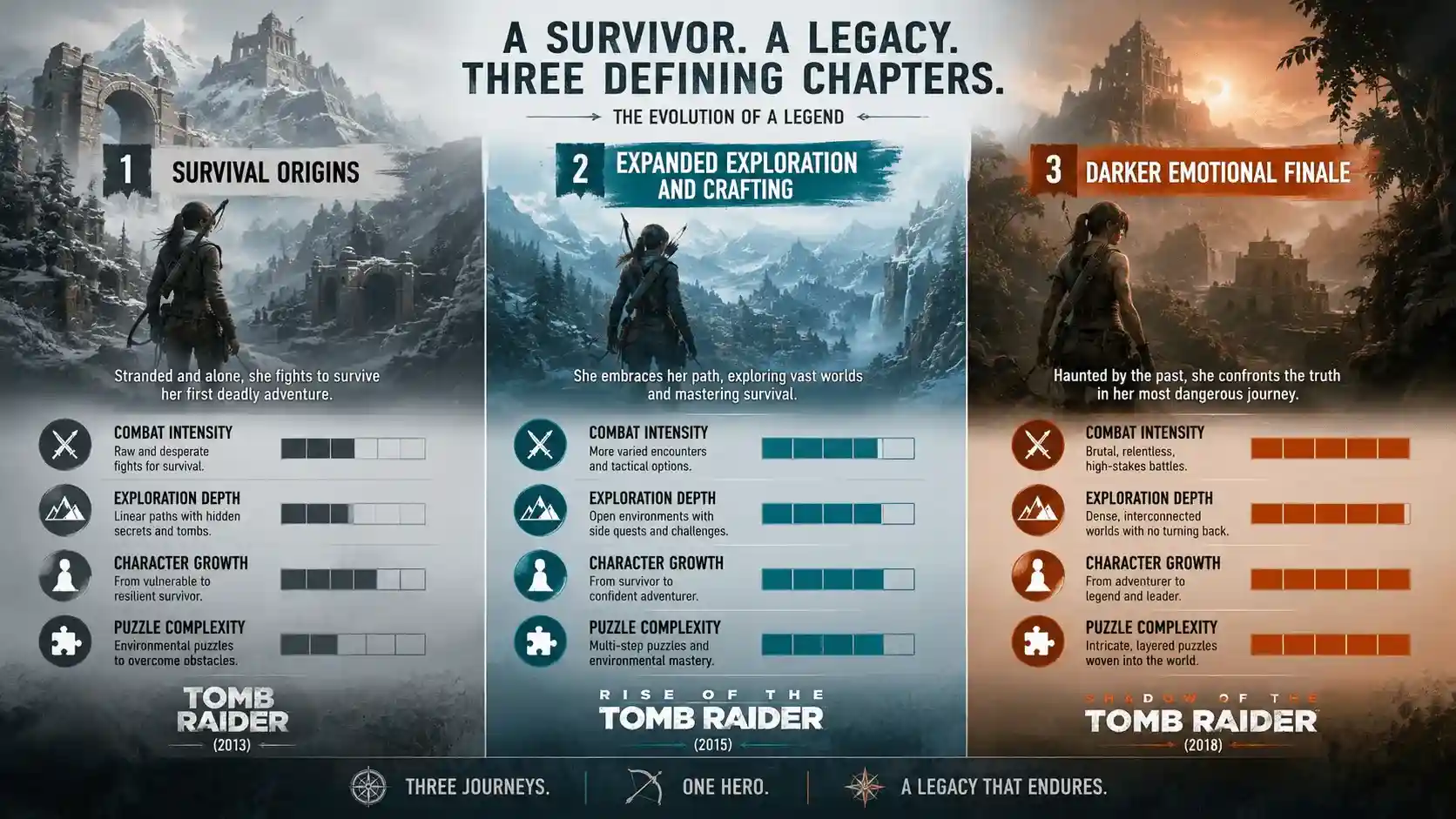
Crystal Dynamics’ rebooted Tomb Raider trilogy reinvented Lara Croft as a younger, more vulnerable hero finding her strength — a survival narrative that gradually evolved into full open-world adventure across three games.
Tomb Raider (2013) — Review
The reboot that relaunched Lara Croft for a new generation. Gritty, cinematic, and emotionally committed in ways earlier games never attempted. Its survival-horror opening hours remain some of the most effective in the series.
Our Tomb Raider 2013 review covers the full campaign, its narrative approach, how it compares to classic Tomb Raider, and what it does better (and worse) than its sequels.
Rise of the Tomb Raider — Review
The sequel expanded the scope significantly — larger environments, deeper crafting systems, and a story that leaned harder into Lara’s relationship with her father’s legacy. Many fans consider it the best entry in the reboot trilogy.
Our Rise of the Tomb Raider review covers what the sequel improves over the original, where it stumbles, and whether the Siberian setting lives up to its visual promise.
Shadow of the Tomb Raider — Review
The final chapter in the reboot trilogy gave Lara her most morally complex story — one that examined the consequences of her actions rather than simply celebrating her heroism. It is the most thoughtful of the three games narratively, though not always the most fun.
Our Shadow of the Tomb Raider review evaluates how it closes the trilogy, what it does differently from its predecessors, and whether the tonal shift works as a finale.
Platformers: Mario & Friends
Super Mario Odyssey — Full Review & Rating
Super Mario Odyssey is one of Nintendo’s purest expressions of joyful game design — a 3D platformer that gives you a toy box and trusts you to find the fun. The moon-collecting structure, the Cappy mechanic, and the variety of kingdoms make it one of the most endlessly playable games on Switch.
Our Super Mario Odyssey review covers the full game in depth — what makes it so satisfying, how it compares to Galaxy and Sunshine, and what it looks like for returning players vs first-timers in 2026.
Super Mario 3D All-Stars — Review
3D All-Stars bundled three iconic Mario games — Super Mario 64, Sunshine, and Galaxy — into a single Switch release, with updated resolution and minor control adjustments. The collection sparked debate: were these ports good enough? Were the games selected the right ones?
Our Mario 3D All-Stars review covers each game individually, evaluates the quality of each port, and gives an honest verdict on whether the collection was worth its price and whether it holds up for modern players.
New Super Mario Bros. U Deluxe — Review
New Super Mario Bros. U Deluxe brought the Wii U’s best 2D Mario game to Switch with Nabbit and Toadette as new playable characters for accessibility. It is traditional Mario at its tightest — no gimmicks, no grand design experiments, just precise 2D platforming with excellent level design.
Our New Super Mario Bros. U Deluxe review evaluates whether it is worth playing alongside Odyssey, how it compares to Wonder, and which audience it serves best.
Mega Man 11 — Review
Mega Man 11 marked the Blue Bomber’s long-awaited return to classic 2D action after a nearly decade-long absence. It added the Double Gear system — a new mechanic that allows temporary speed or power boosts — while maintaining the series’ demanding stage design philosophy.
Our Mega Man 11 review covers how the new mechanics change the formula, how it ranks against the classic series, and whether it is a good entry point for newcomers or best reserved for returning fans.
Spyro Reignited Trilogy — Review
The Spyro Reignited Trilogy brought all three original PlayStation Spyro games back to life with gorgeous new visuals, rerecorded music, and fully reanimated cutscenes — all while staying remarkably faithful to the level design of the originals.
Our Spyro Reignited Trilogy review covers how each of the three games holds up after remastering, which entry is the strongest, and whether the trilogy is worth picking up for players who grew up with the originals vs those discovering it fresh.
Pokémon Series Reviews
Pokémon X — Review
Pokémon X introduced the franchise to full 3D for the first time on Nintendo 3DS, bringing the Kalos region and Mega Evolution to the series. It is the most accessible mainline entry in the series history — perhaps too accessible, with a difficulty curve that never seriously challenges the player.
Our Pokémon X review looks at the game’s genuine innovations alongside its design conservatism, and evaluates where it sits in the franchise rankings for players deciding whether to revisit it.
Pokémon Omega Ruby — Review
Omega Ruby is a remake of the beloved Hoenn region — bringing Ruby’s story, Pokémon roster, and contest halls into the 3DS era with updated visuals, the DexNav system, and a post-game Delta Episode that remains one of the series’ most memorable bonus stories.
Our Pokémon Omega Ruby review covers how the remake compares to the original, whether the additions justify revisiting a game many already know, and where Omega Ruby ranks among GBA-era remakes.
Horror & Psychological Thrillers
The Evil Within (PS4) — Review
Shinji Mikami’s return to survival horror delivered a game that was deliberately, oppressively difficult — a psychological nightmare set in distorted environments that bent physical laws alongside the protagonist’s sanity. It is not an easy game to recommend broadly, but for the right player, it is essential.
Our Evil Within PS4 review evaluates the horror design, the difficulty spikes, the narrative’s cryptic storytelling, and whether it holds up as a survival horror experience in 2026.
Outlast 2 — Review
Outlast 2 replaced the asylum setting of the original with open-air rural horror — a remote Arizona cult community with a disturbingly committed approach to its biblical imagery. It is the most disturbing game in the Outlast series, and deliberately so.
Our Outlast 2 review covers the horror design philosophy, how it compares to the original game, the controversy around its content, and whether it achieves genuine fear or relies too heavily on shock value.
Layers of Fear — Review
Layers of Fear is a first-person psychological horror game about a painter descending into madness — a walking-simulator-adjacent experience where the house literally rearranges itself around you as the narrative unravels. It is short, atmospheric, and effective at dread in a way that jump-scare-heavy games rarely manage.
Our Layers of Fear review covers the atmosphere, the narrative structure, its length relative to its price, and who will get the most from it.
RPG & Strategy Reviews
Octopath Traveler II — Review
Octopath Traveler II took everything the original pioneered — the HD-2D art style, the eight-protagonist structure, the Path Action system — and refined it significantly. The individual character stories are stronger, the world interconnection is deeper, and the Crossed Paths chapters add a dimension the first game lacked.
Our Octopath Traveler II review gives a full evaluation of the game’s strengths, where it still falls short of a traditional RPG’s narrative cohesion, and whether it is the right game for you if you either did or did not enjoy the original.
Age of Mythology: Tale of the Dragon — Review
Tale of the Dragon added a Chinese mythology expansion to Age of Mythology — a new major faction based on the gods and monsters of Chinese legend, with new campaign content and a new major god system. Its reception was mixed among the established player base.
Our Age of Mythology Tale of the Dragon review covers the new faction’s design, how the new content integrates with the base game, and whether it is essential for fans of the original.
Indie & Hidden Gems
GRIS — Review
GRIS is one of the most visually arresting games ever made — a wordless, platforming meditation on grief and recovery told entirely through color, movement, and music. It is not mechanically demanding; it is emotionally demanding, and it earns every moment of its journey.
Our GRIS review covers the art direction, the gameplay’s relationship to its themes, the music, and the type of player most likely to connect with it deeply. A short review for a short game — but one worth reading before you start it.
Raji: An Ancient Epic — Review
Raji is a story-driven action game rooted in Indian mythology — a rare and genuinely beautiful setting for the medium, with hand-painted visual panels inspired by Indian art and architecture. It is also a game with noticeable mechanical roughness that makes its ambition bittersweet.
Our Raji review covers the world-building, the narrative, the combat system’s strengths and limitations, and why it matters as a cultural statement regardless of its technical imperfections.
Firewatch — Review
Firewatch is a first-person narrative adventure set in the Wyoming wilderness — a two-character story told almost entirely through walkie-talkie conversations, environmental discovery, and the slow revelation of a mystery that is more personal than supernatural.
It is one of Campo Santo’s great achievements in environmental storytelling, and one of the best arguments for the walking-simulator genre as a legitimate form of game design. Our Firewatch review gives an honest verdict on its length, its ending, and whether it delivers on its emotional promises.
AER: Memories of Old — Review
AER is a short, atmospheric exploration game where you play as a girl who transforms into a bird to travel between floating island ruins in a dying world. It is quietly beautiful and almost completely unknown. If you value atmosphere and discovery over challenge, it is worth an afternoon.
Our AER: Memories of Old review covers the exploration design, the world’s visual language, its runtime, and the type of player most likely to love it.
Fairune (3DS) — Review
Fairune is a micro-RPG — a bite-sized action RPG with a retro pixel aesthetic and a surprisingly clever puzzle system hidden beneath its minimalism. It is a game that rewards patience and observation more than combat skill.
Our Fairune 3DS review covers the gameplay design philosophy, how it fits into the broader Fairune series, and whether it is worth revisiting on an older handheld in 2026.
Fairune 2 — Review
Fairune 2 expanded on the original with a larger world, more puzzle complexity, and a longer runtime while maintaining the series’ signature minimalist design. For fans of the first game, it is a better version of the same experience.
Our Fairune 2 review covers what changes between the two games, which is the better entry point, and how the series compares to other minimalist RPGs.
Classic & Retro Collections
PS4 Mega Drive Classics — Game List, Review & Guide
The Mega Drive Classics collection brought over 50 Sega Genesis games to PS4 in a single package — one of the most comprehensive retro compilations available on the platform. The collection includes beloved titles from the golden era of 16-bit gaming, from Sonic and Streets of Rage to Phantasy Star and Gunstar Heroes.
Our PS4 Mega Drive Classics guide covers the full game list, highlights the essential picks from the collection, evaluates the emulation quality and additional features, and gives advice on which titles to prioritize if you are new to Sega’s classic library.
Essential for: Retro gaming fans, anyone building a PS4 collection, and players curious about gaming history.
Super Probotector: Alien Rebels — Review & Gameplay Guide
Super Probotector is the European and Australian version of Contra III: The Alien Wars for SNES — one of the hardest and most well-designed run-and-gun games ever made. It replaced the human protagonists with robots for regional release, and has since become a cult title in its own right.
Our Super Probotector review and gameplay guide covers the game’s design, difficulty, the differences between regional versions, and why it remains a landmark of the genre worth experiencing in 2026.
Before jumping into demanding games, it’s important to know how your system will perform in real conditions. Use our FPS Calculator for Low-End PC to estimate and optimize your gaming performance instantly.
Our Review Philosophy
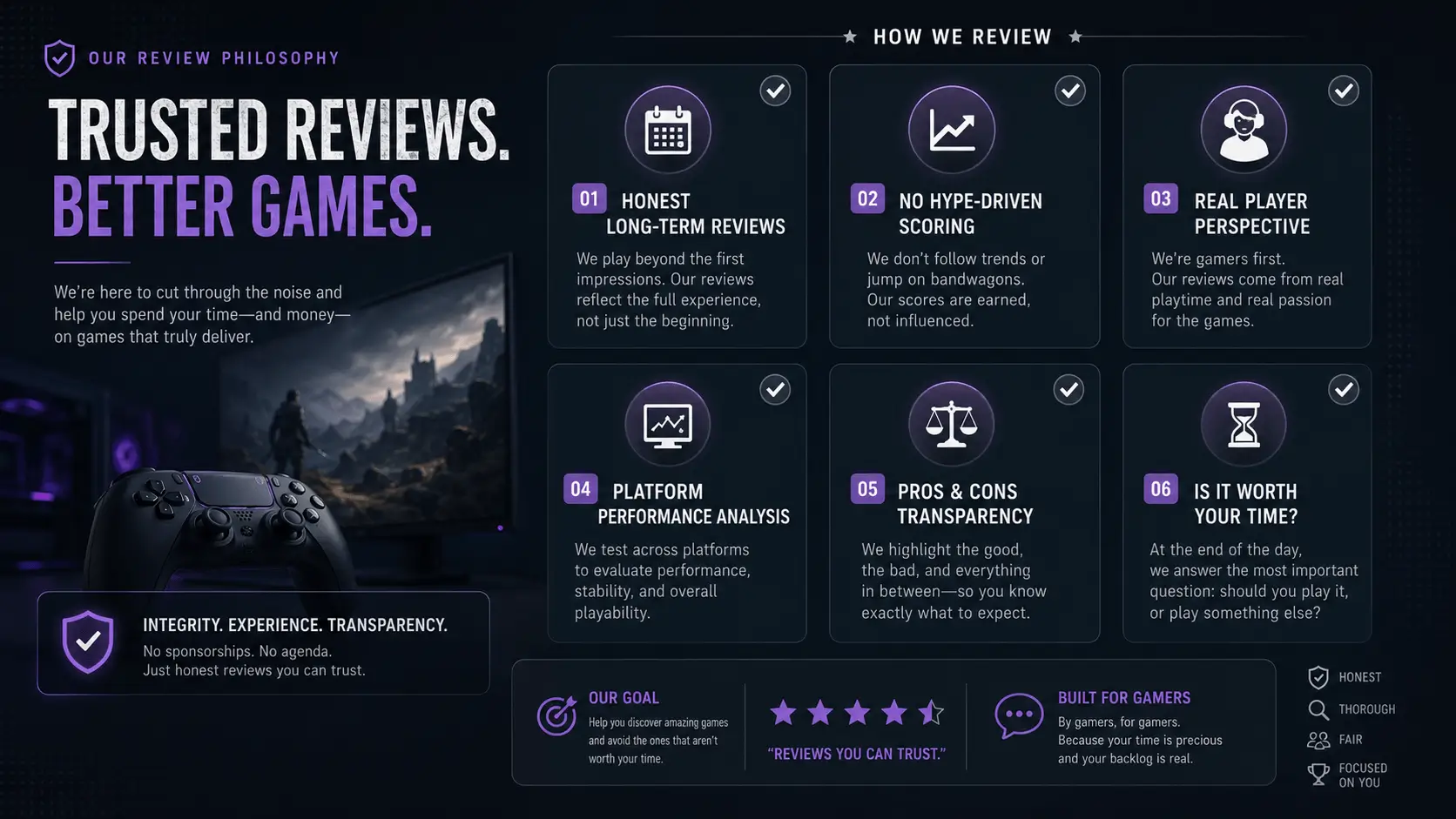
Every review on Prime Games Arena is written by players, for players. We do not chase review scores. We do not time reviews to capitalize on launch traffic. We write about games when we have had time to play them properly — sometimes long after launch, which often gives us a more accurate picture of what the experience is actually like.
Our reviews ask a consistent set of questions: Is this game worth your time? Is it worth its price? Who is its ideal audience? What does it do better than alternatives in its genre? And crucially — what are its real weaknesses, not softened for SEO or publisher relationships?
If you want more from any review listed above, the full article goes deeper than the summary here. And if there is a game you want us to cover that we have not yet reviewed, reach out through our contact page.
FAQs About Game Reviews & Prime Games Arena
1. Are Prime Games Arena reviews spoiler-free?
Yes — most reviews are written to avoid major story spoilers while still giving enough detail about gameplay, mechanics, performance, and overall experience. If a review contains significant spoilers, it is usually clearly warned beforehand.
2. Do these reviews cover newer versions, remasters, or PC ports?
Absolutely. Many reviews are updated or written with modern releases in mind, including PS5 upgrades, remasters, Director’s Cuts, and PC ports. For example, the reviews for Ghost of Tsushima and Uncharted 4: A Thief’s End discuss how the games hold up in 2026 across current platforms.
3. Are these reviews written for casual players or hardcore gamers?
Both. The reviews are designed to explain who each game is actually for. Some games like DOOM or Super Probotector: Alien Rebels appeal more to challenge-focused players, while games like GRIS or Firewatch are more story and atmosphere driven.
4. How are Prime Games Arena reviews different from major gaming sites?
The focus is less on hype and review scores, and more on long-term player experience. Instead of reviewing games only at launch, many articles evaluate how games age over time, whether they are still worth buying, and how they compare to modern alternatives.
5. Which games reviewed on Prime Games Arena are best for beginners?
Good beginner-friendly recommendations include Super Mario Odyssey, Ratchet & Clank, Pokémon X, and Spyro Reignited Trilogy because they are accessible, polished, and easy to enjoy even for newer players.


35 Responses